
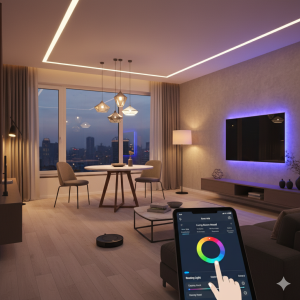
Smart Lighting Solutions: Top Smart Home Lighting Trends & Ideas for 2025: Illuminate Your World, Intellig
Smart Lighting Solutions: Top Smart Home Lighting Trends & Ideas for 2025
For decades, our interaction with home lighting has been static and binary: on or off. But a quiet revolution has been happening in our walls and ceilings, one that is fundamentally changing our relationship with light. This revolution is powered by smart lighting solutions—a sophisticated, interconnected ecosystem that offers unprecedented control, efficiency, and ambiance.
Smart lighting is no longer a futuristic concept reserved for tech enthusiasts; it’s an accessible and increasingly essential component of the modern home. It promises convenience that feels like magic, significant cuts in your energy bill, a robust layer of security, and the ability to craft the perfect atmosphere for any occasion with a simple voice command or tap on your smartphone.
This comprehensive guide will illuminate every aspect of smart lighting. We’ll demystify the technology, explore the transformative benefits, break down the different types of systems available, and help you plan your own intelligent lighting upgrade. Prepare to see your home in a whole new light.
Demystifying the Glow: What Exactly Are Smart Lighting Solutions?
smart LED setup is a network of lighting fixtures—bulbs, switches, lamps, and entire light systems—that can be controlled remotely and automated. Unlike traditional lighting, which relies on a manual, physical switch to complete an electrical circuit, smart lighting integrates technology that allows for wireless communication and intelligent control.
A complete smart lighting ecosystem typically consists of several key components:
- The Light Source: This can be a smart bulb, a smart light strip, or an integrated smart fixture.
- The Control Hub (Optional): Some systems use a central hub or bridge that connects to your router and communicates with the lights. This is common with protocols like Zigbee and Z-Wave.
- The Controller: This is how you interact with the system. It could be a smartphone app, a smart speaker with a voice assistant (like Amazon Alexa or Google Assistant), a physical smart switch on the wall, or even a motion sensor.
- The Network: The invisible force connecting everything, whether it’s your home’s Wi-Fi, a Bluetooth connection, or a dedicated mesh network.
The magic lies in the synergy between these components, creating a flexible and responsive lighting environment that adapts to your life.
The Magic Behind the Switch: How Smart Lighting Works
Understanding the “how” behind smart lighting can help you choose the right system for your needs. The entire process hinges on wireless communication protocols that transmit your commands from the controller to the light.
The Brain of the System: Connectivity Protocols
The “language” your smart lights speak is determined by their connectivity protocol. The most common are Wi-Fi, Bluetooth, Zigbee, and Z-Wave.
- Wi-Fi: This is the most straightforward protocol. Wi-Fi smart bulbs connect directly to your home’s existing wireless network, with no hub required. You simply screw in the bulb, connect it to your Wi-Fi via a companion app, and you’re ready to go.
- Pros: Easy setup, no extra hardware needed.
- Cons: Can congest your Wi-Fi network if you have many devices; range can be limited by your router’s signal strength.
- Bluetooth: Bluetooth-enabled smart lights connect directly to your smartphone or tablet. They are designed for close-range control within a single room.
- Pros: Very simple pairing, low cost, doesn’t use your Wi-Fi.
- Cons: Extremely limited range (typically 30-50 feet), you usually need to be within the room to control the lights.
- Zigbee and Z-Wave: These are low-power mesh network protocols specifically designed for smart home devices. Instead of connecting directly to your router, each device acts as a node, passing the signal along to other devices. This creates a resilient, self-healing network that can cover a large area. These systems almost always smart lighting solutions require a central hub or bridge that plugs into your router and translates the Zigbee/Z-Wave signal for your home network.
- Pros: Extremely reliable for large-scale installations, low energy consumption, less network congestion than Wi-Fi.
- Cons: Requires the purchase of a hub, making the initial investment higher.
From Command to Action: The Control Chain
No matter the protocol, the basic sequence of events is similar:
- Input: You issue a command. This could be saying, “Hey Google, dim the living room lights to 50%,” tapping a button in an app, or flipping a smart switch.
- Transmission: Your voice command is sent to the smart speaker, which sends it over the internet. Your app command is sent over your local Wi-Fi. This command travels to the hub (if one is used) or directly to the light bulb.
- Execution: The smart light’s internal receiver accepts the command and adjusts its components accordingly—whether that’s changing the color of the LED diodes, reducing the power flow to dim the light, or turning it off completely.
- Feedback: The light’s status is often sent back through the network to your app, confirming that it has received and executed the command.
This entire process happens in a fraction of a second, creating a seamless and responsive user experience.
Unparalleled Convenience and Control
This is the most immediate and obvious advantage. Smart lighting puts complete control of your home’s ambiance in the palm of your hand.
- Remote Control: Forgot to turn off the kitchen lights after leaving for vacation? No problem. Open your app from anywhere in the world and switch them off, saving energy and providing peace of mind.
- Voice Control: The ability to control your lights with your voice is a game-changer for accessibility and pure convenience. Cook with your hands full? “Alexa, turn on the kitchen lights.” Watching a movie? “Hey Google, dim the lights.”
- Scheduling and Automation: Set your lights to turn on automatically at sunset and off at bedtime. Have your bedroom lights gradually brighten in the morning to simulate a natural sunrise, making waking up easier. This automation removes the mental load of managing your home’s lighting.
While smart bulbs can be more expensive upfront than their traditional counterparts, they offer substantial long-term savings.
- Inherent LED Efficiency: Nearly all smart lights use LED (Light Emitting Diode) technology, which is up to 80-90% more energy-efficient than incandescent bulbs. They also last significantly longer.
- Intelligent Dimming: Dimming a light doesn’t just reduce its brightness; it reduces its power consumption. Running a light at 50% brightness can use significantly less than 50% of the energy.
- Automated Schedules: The “lights on at sunset, off at 11 PM” schedule ensures you never waste electricity by leaving lights on all night. Geofencing can even turn lights off automatically when your phone (and you) leave the house.
- Motion Sensors: Integrating motion sensors in hallways, closets, and bathrooms ensures lights are only on when someone is actually in the room, eliminating waste from lights being left on by accident.
Enhanced Home Security
A well-lit home is a deterrent to potential intruders, and smart lighting offers powerful, dynamic security features.
- “Vacation Mode” or Randomization: This feature automatically turns lights on and off in a random pattern to mimic the activity of someone being home, making your house appear occupied even when you’re away.
- Motion-Activated Floodlights: Connect smart outdoor floodlights to motion sensors. The sudden, bright illumination can startle an unwanted visitor and alert you or your neighbors to activity outside.
- Integration with Security Systems: Your smart lights can be programmed to flash red if your security alarm is triggered, or to turn on all lights inside and outside if a door or window sensor is breached.
A Spectrum of Choice: Navigating the Types of Smart Lighting
The world of smart lighting is diverse. Understanding the different types of products is crucial for building a system that fits your budget and your home.
Smart Bulbs: The Easiest Entry Point
These are the most popular and accessible products. They are standard-shaped bulbs (like A19 for lamps or BR30 for recessed cans) that you simply screw into your existing fixtures.
- Best For: Renters, beginners, and those who want to start small without any electrical work.
- Pros: Incredibly easy to install; offers full color and dimming control.
- Cons: Can be expensive per bulb; requires the physical wall switch to remain in the “on” position, which can confuse guests or lead to someone accidentally cutting power to the smart bulb.
Smart Switches and Dimmers: Whole-Room Control
Instead of making the bulb smart, these devices make the wall switch smart. They replace your existing light switches and control the power that flows to your standard, reckless bulbs.
-
.
- Cons: Requires some basic electrical wiring (often needing a neutral wire in the switch box), which may be challenging for older homes; installation is not as simple as screwing in a bulb.
Smart Light Strips and Fixtures: Creative and Integrated
modern lighting systems For a more seamless and customized look, you can opt for products where the smart technology is built-in.
- Smart Light Strips: These flexible adhesive strips of LEDs are perfect for creating accent lighting under kitchen cabinets, behind TVs, along baseboards, or in coves.
- Integrated Smart Fixtures: These are complete light fixtures—such as ceiling fans, pendant lights, or outdoor sconces—that come with smart technology built-in.
- Best For: Design-conscious homeowners, accent lighting, and unique applications.
- Pros: Creates a clean, professional look with no visible smart bulbs.
Lamps and Plug-In Modules: Portable and Flexible
Many manufacturers now offer table and floor lamps with smart technology built-in. Alternatively, you can use a smart plug, which is a small outlet that you plug a standard lamp into, making the entire lamp smart.
- Best For: Adding smart control to specific, portable lamps without replacing the bulb.
- Pros: Very easy to use; highly portable.
- Cons: Typically only offers on/off and dimming (if the lamp has a dimmer), not color changing.
Your Smart Lighting Checklist: Essential Features to Consider
Before you buy, consider these key features to smart home lighting guide ensure you choose a system that meets your needs.
- Color Capabilities: Do you just want dimmable white light, or do you want the full spectrum of colors (RGB)? If you like the idea of tunable white light, make sure the product specifies it.
- Brightness (Lumens): Don’t be fooled by wattage. With LEDs, lumens are the true measure of brightness. A 60W incandescent equivalent is around 800 lumens. Make sure the smart bulb is bright enough for its intended location.
- Voice Assistant Compatibility: Ensure the system you choose works seamlessly Smart Lighting Solutions with your preferred voice assistant: Amazon Alexa, Google Assistant, or Apple’s Siri/HomeKit.
- App Functionality: A good companion app is the heart of the system. Look for features like creating “scenes” (e.g., “Movie Night” that dims lights to 20%), setting complex schedules, and geofencing.
- Ecosystem Compatibility: Do you plan to expand
your smart home? If so, choose a lighting system that integrates well with other smart devices like thermostats, security cameras, and door locks. - Power Source: Are you comfortable with wiring, or do you need a plug-and-play solution? This will determine whether you look at smart switches or smart bulbs.
Getting Started: A Simple Guide to Planning Your Setup
Ready to take the plunge? Here’s a simple plan to get started.
- Start Small: You don’t need to convert your entire house at once. Pick a single room to start with, like the living room or a home office. This allows you to learn the technology without being overwhelmed.
- Define Your Goals: What is most important to you? Is it the convenience of voice control, the energy savings from scheduling, or the security of vacation mode? Your primary goal will Smart Lighting Solutions influence which products you choose.
- Choose Your Ecosystem: Decide whether you want a simple Wi-Fi system or a more robust Zigbee/Z-Wave system with a hub. If you plan on a large-scale installation, a hub-based system is often more reliable in the long run.
The Future is Bright
Smart Lighting Solutions have evolved from a niche gadget into a foundational element of the intelligent home. They offer a compelling blend of convenience, efficiency, security, and creativity that can genuinely enhance your daily life.
The future of home lighting isn’t just about seeing in the dark—it’s about living more intelligently.