
Are Smart Home Devices Secure? Protect your privacy with expert insights and easy tips to keep your connected home safe from hackers and data leaks.
Connected home technology is no longer a futuristic luxury; it’s quickly becoming an essential part of modern living. From adjusting the thermostat with a smartphone to monitoring entrances through voice-enabled cameras, IoT products make daily routines more convenient, efficient, and even fun. Analysts predict that by 2025, over 375 million connected home gadgets will be in use worldwide.
But convenience comes with responsibility. The pressing question is: Are smart home devices really secure?
While these tools enhance comfort, they can also expose your home to digital threats. A hacked thermostat may signal when you’re away, a compromised door lock could allow unauthorized entry, and even voice assistants might collect more information than you realize.
That’s the question I’m going to explore today. Smart devices are everywhere now door locks, cameras, thermostats, and even refrigerators that can order milk for you. But with all that connectivity comes a risk. After all, if my phone can talk to my smart lock, couldn’t a hacker do the same?

So, let’s dive deep. I’ll cover how these devices work, the real risks, common myths, what hackers can (and can’t) do, and the steps I personally take to keep my home as safe as possible. By the end, you’ll know whether these devices are worth the risk—and how to protect your digital front door as carefully as you lock your physical one.
Quick Snapshot: Are Smart Home Devices Secure? What You’ll Learn
Before we go too far, here’s a quick overview of what I’ll cover:
- How smart devices connect and operate.
- The most common security risks (and why some are scarier than others).
- What hackers could realistically do if they got in.
- Popular myths that people often believe (and why they’re not entirely true).
- My own step-by-step approach to keeping devices secure.
- Whether I think the convenience outweighs the risks.
How Smart Home Devices Actually Work?
Let’s start with the basics. A “smart” home device is simply a gadget connected to the internet (usually via Wi-Fi, Bluetooth, Zigbee, or Z-Wave) that can be controlled remotely. Think of smart bulbs you can dim with an app, or a thermostat you can adjust while you’re still at work.
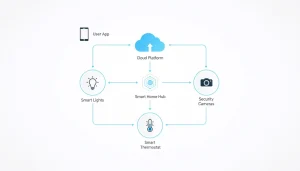
Most smart devices talk to a hub or a cloud service. For example, when I ask Alexa to turn on the lights, my command travels through Amazon’s servers before bouncing back to my living room lamp. That means the device itself isn’t just interacting with me—it’s also sharing data with manufacturers, apps, and sometimes third-party integrations.
This connectivity is what makes them convenient—but it’s also what makes them vulnerable. If a hacker can intercept or exploit that communication, they could potentially gain control.
If you’re curious about the setup side of things, I’ve also written about how to connect smart home devices to WiFi.
What Are Connected Smart Home Gadgets?
Connected home gadgets, often called IoT (Internet of Things) devices, are internet-enabled tools designed to automate and manage household functions. They range from simple lighting controls to advanced security systems.
Common Examples of Connected Gadgets
- Smart locks – Keyless entry systems controlled via mobile apps.
- Smart thermostats – Energy-efficient climate control devices connected to apps.
- Cameras & doorbells – Real-time monitoring with remote alerts.
- Voice assistants – Devices like Alexa, Google Assistant, or Siri that provide hands-free control.
- Intelligent appliances – Refrigerators, ovens, and washing machines connected to the cloud.
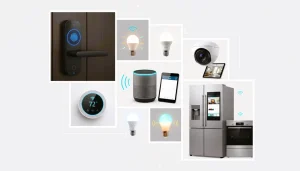
These gadgets usually use WiFi, Bluetooth, Zigbee, or Z Wave to connect. They often need apps or cloud services to work.
Every connection is a potential vulnerability, making network security a top priority for a safe smart home.
The Security Risks of Connected Home Tools
Although connected gadgets are convenient, they also bring several security concerns. Below are the most common threats:
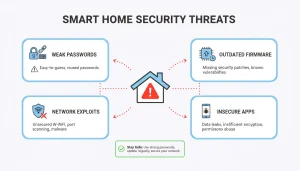
1. Are Smart Home Devices Secure with Weak or Default Passwords
Many products ship with generic passwords such as “admin123.” If these credentials aren’t changed, unauthorized access becomes trivial.
2. Outdated Software & Firmware
Manufacturers may release updates infrequently, and users often ignore them. Devices running outdated firmware are highly susceptible to exploitation.
3. Vulnerable Mobile Applications
Some companion apps request unnecessary permissions, like microphone or location access, which can be misused for data collection.
4. Are Smart Home Devices Privacy Concerns
Voice assistants may store conversations, and smart TVs can track viewing habits. Certain companies have even been caught selling user data to third parties.
5. Network Exploits
A poorly secured home Wi-Fi network allows hackers to intercept communications or take control of devices.
6. Cheap, Off-Brand Smart Home Devices: Are They Secure?
I get it—who doesn’t love a bargain? But cheap, no-name devices often skimp on security features. A $10 smart plug might save you money today, but it could cost you your privacy tomorrow.
7. Cloud Storage Risks
Many cameras and locks send data to the cloud. If that cloud service gets breached, hackers could access recordings or personal data.
8. Insecure Apps & Integrations
Third-party apps sometimes ask for unnecessary permissions. The more apps that connect to your devices, the more potential entry points exist.
Example: In 2021, researchers found vulnerabilities in specific smart cameras that allowed remote access to live feeds.
How Hackers Exploit Connected Home Systems
Cybercriminals use a variety of techniques to target connected home gadgets:
- Brute-force attacks: Repeatedly guessing weak passwords until successful.
- Smart locks: A hacker could theoretically unlock your door.
- Exploiting outdated systems: Targeting devices without current firmware updates.
- Man-in-the-middle attacks: Intercepting communication between devices and servers.
- Hijacking cameras & microphones: Turning devices into surveillance tools.
- Botnets (like Mirai): Compromised gadgets used to launch large-scale cyberattacks.
- Thermostats & lights: Less dangerous, more annoying—imagine your thermostat cranking to 90° in July.
Once attackers breach your network, they can move beyond IoT devices to steal sensitive data from laptops, smartphones, or cloud storage.
Are Connected Home Gadgets Becoming Safer?
The good news is, yes—security is gradually improving.
- Two-factor authentication (2FA), encryption, and auto-updates are becoming standard features.
- Regulations like the U.S. IoT Cybersecurity Improvement Act and Europe’s GDPR are pushing manufacturers to prioritize security.
- Major brands such as Google (Nest), Amazon (Ring), and Samsung (SmartThings) invest heavily in protection compared to generic off-brand devices.
However, caution is still needed. Cheap or unbranded gadgets often compromise on security features, making them riskier for home use.
Practical Steps to Protect Your Connected Home
Adopting these measures will significantly improve the safety of your IoT products:
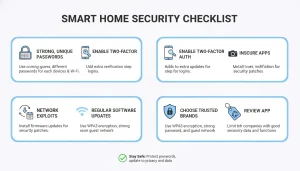
1. Are Strong, Unique Passwords for Smart Home Devices Secure?
- Avoid repeating passwords across accounts.
- Use a password manager to generate and store secure credentials.
2. Enable Two-Factor Authentication (2FA)
- Adds an extra layer of protection even if a password is leaked.
3. Keep Software and Firmware Updated
- Install updates immediately to patch vulnerabilities.
4. Are Smart Home Devices Secure Your Wi-Fi Network
- Change default router credentials.
- Use WPA3 encryption where possible.
- Create a separate guest network for connected gadgets.
5. Are Smart Home Device Limit App Permissions
- Grant apps only the access they truly need to function.
6. Purchase From Trusted Brands: Are Smart Home Devices Secure
- Choose companies known for long-term support and strong security practices.
7. Use Security Tools
- Smart firewalls (e.g., Firewalla)
- Network monitoring apps (e.g., Fing)
- VPNs for IoT devices
Security Tools & Apps for Connected Homes
Some tools can make your system more resilient:
- Samsung SmartThings Hub: Centralized device management with encryption.
- Bitdefender Box: Protects all IoT devices on your network.
- Norton Core Router: Built-in malware and network protection.
- Fing App: Monitors connected gadgets and detects unusual activity.
These solutions help secure not only individual gadgets but the entire home network.
Emerging Trends in Connected Home Security
The future promises more robust and intelligent protection systems:
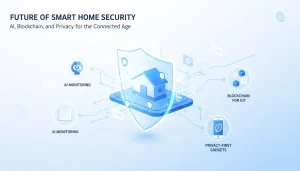
- AI-Powered Protection: Detects unusual activity and blocks potential threats automatically.
- Blockchain for IoT: Prevents tampering and ensures secure device communication.
- Stronger Regulations: Governments worldwide are enforcing stricter IoT security standards.
- Self-Healing Networks: Devices that detect vulnerabilities and automatically fix them without user intervention.
- Privacy-First Gadgets: Manufacturers are increasingly emphasizing on-device processing to reduce cloud exposure.
Common Myths About Connected Home Safety
- Cheap devices are fine if you change passwords.
- Myth: Low-quality devices often have unpatched firmware and poor encryption.
- Voice assistants are always listening to everything.
- Reality: They only listen for wake words, but data may still be stored on servers.
- I don’t need updates if my device works fine.
- Ignoring updates leaves known vulnerabilities open to exploitation.
- All Smart Devices Are Unsafe. 0 Not true: Reputable brands like Google, Amazon, Apple, and Samsung invest heavily in security. The risk is higher with unbranded
- If It’s Wi-Fi, It’s Doomed.
o Wi-Fi itself isn’t the problem. The issue is weak passwords, outdated routers, and poor device design.
Are They Worth the Risk? My Honest Take
So, are smart home devices worth it? For me, yes—with caution.
The pros:
- Convenience (I love automating lights and routines).
- Energy savings (smart thermostats really do cut bills).
- Security (ironically, smart cameras can make me safer).
The cons:
- Privacy trade-offs (my data is being collected, no doubt).
- Potential vulnerabilities (though manageable with precautions).
Personally, I think the benefits outweigh the risks—as long as I stay proactive about security. And honestly? My smart coffee maker alone makes it worth it. Because without caffeine, mornings are far more dangerous than hackers.
FAQ: Are Smart Home Devices Secure?
Q1: Are connected gadgets safe to use?
Yes, with strong passwords, regular updates, and reputable brands, your home automation tools are generally secure.
Q2: Can hackers spy through cameras or microphones?
Only if a device is compromised. Always enable encryption and monitor for unusual activity.
Q3: Is my voice assistant always listening?
Devices listen for wake words, but recordings may be stored in the cloud. Review privacy settings to limit data storage.
Q4: Which home systems are safest?
Brands like Google Nest, Apple HomeKit, and Samsung SmartThings have stronger security measures.
Q5: How can I tell if my system is hacked?
Watch for unusual behavior: devices turning on/off automatically, unknown logins, or abnormal network activity.
Conclusion
Are connected home gadgets secure? The answer is yes—but only when proper precautions are taken.
These tools provide convenience and control, but also introduce new digital risks. By adopting strong passwords, updating firmware regularly, securing your network, and choosing trusted brands, you can enjoy the full benefits of a connected home without sacrificing privacy.
A modern home should be not only smart but also resilient to emerging cyber threats.