
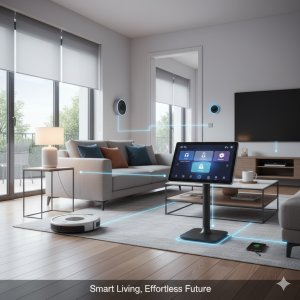
Best Smart Home Gadgets in 2025
The concept of a “smart home” has evolved from a futuristic fantasy into an accessible and practical reality for millions. No longer the domain of tech enthusiasts alone, smart home technology now offers unparalleled convenience, enhanced security, and significant energy savings for everyone. But with a dizzying array of gadgets on the market, where do you begin?
This comprehensive guide is designed to be your roadmap. We’ll navigate the essential categories of smart home devices, highlighting the best smart home gadgets that deliver on their promises. Whether you’re a complete beginner looking to dip your toes in the water or a seasoned pro aiming to expand your ecosystem, this article will help you make informed decisions to create a home that’s truly intelligent.
Before You Buy: Building Your Smart Home Foundation
Before you even think about buying a single smart bulb, it’s crucial to understand the backbone of any smart home: the ecosystem. This is the “brain” that connects and controls all your devices, typically through a voice assistant.
What is a Smart Home Ecosystem?
Think of an ecosystem as the operating system for your home. The three major players are:
- Amazon Alexa: The most popular and widely compatible ecosystem. Alexa’s “Skills” allow it to integrate with tens of thousands of third-party devices, making it an incredibly versatile choice.
- Google Assistant: Known for its superior natural language processing and deep integration with Google services like Calendar and Maps. It feels less like giving commands and more like having a conversation.
- Apple HomeKit: The go-to for Apple loyalists. Its key selling point is best-in-class security and privacy, as all communications are end-to-end encrypted. It’s less open than Alexa or Google but offers a seamless experience for those invested in the Apple universe.
Key Takeaway: Your first major decision is which ecosystem to prioritize. While many devices work with all three, choosing a primary one will ensure the smoothest experience. Most people start with a smart speaker or display from their preferred brand.
The Brains of the Operation: Best Smart Speakers & Displays
A smart speaker or display is the central hub for voice commands, music, and controlling your other devices. It’s the perfect entry point into the world of home automation.
- Amazon Echo (4th Gen) & Echo Show Series
Best for: Overall versatility and compatibility.
The Amazon Echo line is the undisputed king of the smart speaker market. The spherical Echo (4th Gen) delivers surprisingly robust sound for its size and, crucially, includes a built-in Zigbee hub. This means you can connect compatible lights, plugs, and sensors directly to the Echo without needing a separate hub, simplifying your setup.
For a more visual experience, the Echo Show series (available in 5, 8, and 15-inch sizes) adds a touchscreen. You can watch cooking videos, make video calls, see security camera feeds, and get visual weather updates. The Echo Show 15 can even be mounted on a wall to function as a family command center.
- Why it’s a top choice: Unmatched device compatibility, vast library of Alexa Skills, and the built-in Zigbee hub in the standard Echo model.
- Ecosystem: Amazon Alexa
- Google Nest Audio & Nest Hub Series
Best for: Google users and superior voice recognition.
Google’s smart speakers are designed for those who live in the Google ecosystem. The Nest Audio offers excellent audio quality, with a clear focus on delivering rich vocals and balanced bass, making it a fantastic music speaker.
The Nest Hub and Nest Hub Max are Google’s answer to the Echo Show. They feature clean, minimalist designs and brilliant displays. Their standout feature is Google Assistant’s ability to understand context and conversational queries. Ask “Who designed that?” while looking at a picture of the Eiffel Tower, and it will know you’re talking about the tower. The Nest Hub Max also includes a camera for video calls and can even use facial recognition to show personalized information for different family members.
- Why it’s a top choice: The smartest and most conversational voice assistant, excellent integration with Google services, and great display quality.
- Ecosystem: Google Assistant
- Apple HomePod Mini
Best for: Apple users who prioritize privacy and sound quality.
While smaller than its competitors, the HomePod Mini packs a serious punch. Its audio quality is surprisingly rich and 360-degree, outperforming many larger speakers in its price range. Its main draw, however, is its seamless integration with Apple devices.
Hand off music from your iPhone, use it as a high-quality speakerphone for your Mac, and enjoy the rock-solid security of the Apple HomeKit ecosystem. The HomePod Mini also supports the new Thread smart home protocol, making it a future-proof hub for the next generation of smart devices.
- Why it’s a top choice: Superior sound quality in a small package, effortless integration for Apple users, and industry-leading privacy.
- Ecosystem: Apple HomeKit
Set the Mood: Best Smart Lighting Solutions
Smart lighting is one of the most impactful and easiest ways to upgrade your home. It’s not just about turning lights on and off with your voice; it’s about creating ambiance, improving security, and saving energy.
- Philips Hue System
Best for: Unmatched reliability and color options.
Philips Hue is the gold standard for a reason. The system is incredibly reliable, the colors are vibrant and accurate, and the ecosystem is vast. You can choose from millions of colors, shades of white, and various bulb types (strip lights, spotlights, outdoor lamps).
The Hue app is powerful, allowing you to create intricate lighting scenes, sync your lights with movies and music, and set schedules. While it requires a “Hue Bridge” hub for full functionality, this hub ensures a stable and responsive connection.
- Why it’s a top choice: The most polished and comprehensive smart lighting system available, with endless customization options.
- Compatibility: Works with Alexa, Google Assistant, and Apple HomeKit.
- Wyze Bulb & LIFX
Best for: Budget-conscious and hub-free alternatives.
If Philips Hue is too expensive, Wyze offers an incredible value proposition. Their color and white bulbs are a fraction of the cost and don’t require a hub, connecting directly to your Wi-Fi. The app is straightforward, and while it lacks some of Hue’s advanced features, it covers all the essentials perfectly.
For those who want vibrant colors without a hub but with more premium features than Wyze, LIFX is an excellent choice. Their bulbs are known for their extreme brightness and rich color accuracy, making them a favorite for home theater enthusiasts.
- Why they’re top choices: Wyze is the best budget option; LIFX is the best hub-free premium option.
- Compatibility: Both work with all major ecosystems.
Master Your Climate: Best Smart Thermostats
A smart thermostat is one of the few gadgets that can literally pay for itself over time by optimizing your heating and cooling, leading to significant energy savings.
- Google Nest Learning Thermostat
Best for: “Set it and forget it” automation.
The Nest Learning Thermostat is famous for its intelligence. After a few days of manually adjusting the temperature, it learns your schedule and preferences, automatically creating an energy-efficient program. It uses sensors, your phone’s location, and even the weather to make adjustments, ensuring you’re comfortable when you’re home and saving energy when you’re away. Its sleek design and Farsight feature (which shows you the time or temperature from across the room) make it a beautiful addition to any wall.
- Why it’s a top choice: Its learning algorithm is genuinely effective, maximizing comfort and savings with minimal effort.
- Compatibility: Works with all major ecosystems.
- Ecobee SmartThermostat
Best for: Homes with uneven temperatures.
The Ecobee SmartThermostat‘s killer feature is its included room sensors. You can place these sensors in other rooms (like a bedroom or nursery), and the thermostat will use their readings to manage the temperature, ensuring the whole house is comfortable, not just the hallway where the thermostat is located. It also has a built-in Alexa speaker and a crisp touchscreen interface.
- Why it’s a top choice: The room sensors solve a common problem in home heating and cooling, providing more accurate and whole-home comfort.
- Compatibility: Works with all major ecosystems.
Peace of Mind: Essential Smart Security Gadgets
From seeing who’s at the door to monitoring your home while you’re on vacation, smart security gadgets provide invaluable peace of mind.
- Video Doorbells: Ring & Nest
Best for: Seeing and speaking to visitors from anywhere.
A video doorbell is a game-changer. The Ring Video Doorbell (available in wired, battery, and Pro models) and the Google Nest Doorbell are the market leaders. Both send instant notifications to your phone when someone presses the button or motion is detected, allowing you to see, hear, and speak to them from anywhere.
Ring offers a wider variety of models and integrates with its Ring Alarm system. The Nest Doorbell offers better package detection and more intelligent alerts if you’re a Nest Aware subscriber.
- Why they’re top choices: They dramatically enhance home security and convenience, putting eyes on your front door 24/7.
- Compatibility: Ring works best with Alexa; Nest works best with Google Assistant.
- Indoor & Outdoor Security Cameras: Arlo & Wyze
Best for: Monitoring the inside and outside of your home.
For complete surveillance, you need security cameras. Arlo cameras are known for their high-quality video, wire-free design, and weatherproofing, making them ideal for both indoor and outdoor use. Their magnetic mounts and long battery life make them incredibly easy to install.
For an unbeatable budget option, Wyze Cams offer a staggering amount of features for a low price, including 2K video resolution, person detection, and even AI-powered package detection. They require a power outlet but are an incredible value.
- Why they’re top choices: Arlo is the premium, feature-rich choice; Wyze is the best value-for-money option.
- Compatibility: Both work with all major ecosystems.
- Smart Locks: August & Yale
Best for: Keyless entry and remote access control.
A smart lock allows you to lock and unlock your door using your phone, a keypad, or your voice. You can create temporary digital keys for guests and receive notifications whenever the door is unlocked. The August Wi-Fi Smart Lock is a brilliant over-the-air retrofit that installs on the inside of your existing deadbolt, requiring no changes to your keys. For a full replacement, the Yale Assure Lock SL is a sleek and reliable option with a keypad and integrated smart tech.
- Why they’re top choices: They eliminate the need for physical keys and give you complete control over access to your home.
- Compatibility: Both work with all major ecosystems.
The Unsung Heroes: Smart Plugs & Switches
Don’t underestimate the power of a simple smart plug or switch. These affordable devices are the easiest way to bring “dumb” appliances—like lamps, fans, coffee makers, and Christmas lights—into your smart home.
- TP-Link Kasa Smart Plug: A reliable and feature-rich Wi-Fi plug that works with all major voice assistants and doesn’t require a hub.
- Amazon Smart Plug: The simplest plug to set up if you’re in the Alexa ecosystem. Just plug it in and ask Alexa to discover it.
By scheduling a fan to turn on in the afternoon or a lamp to turn on at sunset, you add a layer of automation and security to your home for just a few dollars.
Frequently Asked Questions About Smart Home Gadgets
Q1: Are smart homes difficult to set up? A: Not at all! Most modern gadgets are designed for easy DIY installation. They typically involve plugging in the device, downloading an app, and following a few simple on-screen instructions to connect it to your Wi-Fi.
Q2: Are smart gadgets secure? Can they be hacked? A: Security is a valid concern. To stay safe, always buy from reputable brands, change the default passwords on your devices, and keep your router’s firmware updated. Using a secure ecosystem like Apple HomeKit can also provide an extra layer of protection.
Q3: Can I mix and match different brands (e.g., Google Assistant with Philips Hue)? A: Yes! This is the beauty of modern smart homes. Most devices are designed to be cross-platform. A Philips Hue bulb will work perfectly with a Google Nest Hub, and an August lock will work with an Amazon Echo. Just check the product’s compatibility list before buying.
Conclusion: Your Connected Future Awaits
Building a smart home is a journey, not a destination. The key is to start with a solid foundation—your chosen ecosystem—and a core device like a smart speaker. From there, you can gradually expand, adding the best smart home gadgets that solve real problems in your daily life, whether it’s automating your lights, securing your front door, or saving on your energy bill.
The technology is more accessible, reliable, and powerful than ever before. By choosing the right devices, you can transform your living space into a more convenient, comfortable, and secure environment. The future is connected, and it starts in your home.