
Indoor air quality matters. But when deciding between an air purifier or a humidifier, many people feel stuck. They seem like similar devices—both improve your indoor comfort—but their functions are very different. Understanding what each device does, their strengths, limitations, and when to use them (or both) is key to breathing easier.
In this article, you’ll get a clear, professional comparison. You’ll see how each works, which problems they solve, and practical guidance to choose the right one (or combination) for your home.
What Each Device Does: Purifier vs. Humidifier
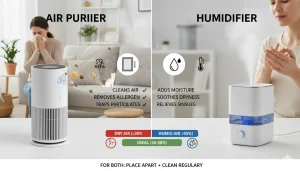
Air Purifier: Cleaner, Healthier Air
An air purifier is designed to remove airborne contaminants—dust, pollen, pet dander, smoke particles, mold spores, volatile organic compounds (VOCs), and more. It does this by pulling air through filters or purification systems and then returning clean air to the room. Its core goal: reduce the pollutants you breathe.
Purifiers often employ multi-stage systems:
- A pre-filter to catch hair and large particles
- A True HEPA filter that traps tiny allergens and particles
- Activated carbon or other media to absorb odors and chemical vapors
- Some use UV light or ionization to neutralize microbes or volatile compounds
Because air purifiers do not alter moisture levels, they don’t affect humidity—they only clean the air. Thus, their effectiveness relies on filtering efficiency, airflow rate, and how clean your filters remain.
Humidifier: Adding Moisture to the Air
A humidifier, on the other hand, adds water vapor or steam into the air. Its mission is not to clean but to raise indoor humidity—especially useful in dry climates or during heating seasons when indoor air becomes excessively dry.
Common types include:
- Cool-mist (evaporative or ultrasonic) humidifiers
- Warm-mist / steam humidifiers
- Ultrasonic models, which vibrate water into fine droplets
By adding moisture, humidifiers help prevent symptoms related to dry air—dry skin, irritated throats, dry nasal passages, and static electricity. However, they do not remove allergens or pollutants from the air.
Core Differences & When to Use Which
Here’s how the two devices diverge in practical use:
| Purpose | Primary Function | Common Benefits | Limitations |
| Air Purifier | Remove particles, allergens, smoke, and VOCs | Reduces triggers for allergies, asthma, and odor | Doesn’t control moisture; filter replacement needed |
| Humidifier | Add moisture to dry air | Soothes dry skin, throat, and nasal passages | Can worsen mold, dust mites if overused; no filtration |
When You Need an Air Purifier
- You live in a polluted area (city smog, wildfire smoke)
- Allergies or asthma flare up indoors
- Pets, cooking, or smoking generate odors and particulates
- You want to reduce mold spores, dust mites, or VOCs
In these scenarios, air purifiers help remove what’s harmful in the air. Filters trap particulates and prevent them from floating around your home.
When You Need a Humidifier
- Indoor air feels dry (e.g. during winter)
- You or your family suffer from dry throat, dry skin, cracked lips
- You use a heater or live in a climate with low humidity
- You want to relieve symptoms of colds or flu
Here, the goal is adding moisture, not removing contaminants. Humidifiers help maintain comfortable humidity levels—typically between 30% and 50%—which supports respiratory comfort and reduces dryness.
Can You Use Both Together?
Absolutely. Many households benefit from running a purifier and a humidifier simultaneously, provided you manage them correctly.
How to make them work in harmony:
- Place them apart. Don’t block airflow or humidifier mist with your purifier.
- Maintain balanced humidity. Keep relative humidity between 30% and 50% to avoid triggering molds or dust mites.
- Use purifier year-round. Indoor pollutants persist regardless of season.
- Use humidifier seasonally (when air is dry). Switch it off when humidity is already sufficient.
- Clean both regularly. A humidifier with stagnant water becomes a mold source; a purifier with clogged filters loses efficacy.
When used together wisely, you get clean air and comfortable moisture—optimal indoor comfort.
Health & Comfort Impact
How Purifiers Help Health
- Remove allergens and pollutants that trigger respiratory issues
- Reduce odor and chemical irritants
- Minimize airborne bacteria and mold spores
- Improve sleep by lowering irritants that disturb breathing
Because they eliminate triggers, purifiers support allergy and asthma management. Studies and testing frequently show that high-quality purifiers can remove up to 99% of airborne particles as small as 0.3 microns (HEPA standard).
How Humidifiers Help Health
- Reduce dry throat and nasal irritation
- Help prevent nosebleeds or cracked lips
- Easier breathing during colds (moist air helps loosen mucus)
- Prevent dry skin and chapped hands or lips
Caution: Over-humidification (> 55%) can lead to mold growth, dust mite proliferation, and worsen respiratory discomfort.
Risks, Maintenance & Common Mistakes
Purifier Risks & Care
- Clogged or dirty filters degrade performance
- Ionizer or ozone-generating models can release ozone—a respiratory irritant
- Poor placement (corners, against walls) restricts airflow
Best practices for purifier upkeep:
- Replace or clean filters on schedule
- Choose ozone-free models
- Monitor device indicators or alerts
- Use Auto mode or sensor-based cleaning
- Keep surroundings dust-free
Humidifier Risks & Care
- Mold and bacteria growth in water tanks
- Mineral deposits or “white dust” from tap water
- Excess humidity leading to condensation on walls
- Improper cleaning causing air quality issues
Maintenance tips:
- Use distilled or demineralized water
- Empty and dry water reservoir daily
- Clean thoroughly every 2–3 days
- Replace filters / cartridges as needed
- Monitor indoor humidity with a hygrometer
A humidifier with neglected water or mold can actually worsen indoor air rather than improve it.
Choosing the Right Device for Your Situation
Here’s how to decide:
If Your Problem Is Airborne Irritants
Pick an air purifier. It directly targets dust, pollen, smoke, VOCs, and particles you can’t see but can feel. If your home climate is not extremely dry, a strong purifier may be enough.
If Your Problem Is Dry Indoor Air
Use a humidifier. When heating systems strip moisture, air becomes cavernously dry. This can make breathing uncomfortable, dry skin worse, and exacerbate throat irritation. In such cases, humidifiers restore balance. Just avoid letting humidity go too high.
If You Face Both Issues
Go with both devices—a purifier to clean, and a humidifier to balance moisture. Use them in tandem, prioritizing purifier placement and humidifier hygiene.
Monitor & Adjust
- Use a hygrometer to measure indoor humidity
- Use air-quality sensors in purifiers to respond to particle spikes
- Adjust usage by season or daily conditions
- Avoid over-relying on one device to solve multiple problems
Practical Tips for Best Performance
- Place your purifier away from walls or obstacles to maximize airflow.
- In humidifier use, keep it at least 2 feet above the floor and away from walls.
- Run purifier on Auto mode to save energy while maintaining air quality.
- For humidifiers, target relative humidity (RH) of 40–50%.
- Use separate maintenance routines—don’t neglect either device.
- In allergic environments, use purifier continuously; humidifier only when air drops below comfortable levels.
Summary & Final Verdict
Air purifiers and humidifiers serve distinct roles. One cleans; the other moisturizes.
- Choose an air purifier when you want to remove allergens, smoke, VOCs, or particles—especially if you live in polluted zones or suffer from allergies or asthma.
- Opt for a humidifier when indoor air feels dry—especially in winter—or when low humidity causes discomfort or respiratory symptoms.
- Use both if your environment requires it, but manage them carefully and maintain both devices regularly.
In many modern homes, a quality air purifier paired with seasonal humidification offers the ideal balance: clean, breathable air with the right moisture level. When used wisely, your living space becomes healthier, more comfortable, and more resilient against the invisible challenges in indoor air.
Frequently Asked Questions
1. Can I use an air purifier and humidifier in the same room?
Yes. Just place them a few feet apart so moisture from the humidifier doesn’t affect the purifier’s sensors or filters.
2. Do humidifiers help with dust or allergies?
Not directly. They add moisture but don’t remove allergens. Use an air purifier for that purpose.
3. Can an air purifier dry out the air?
No. Purifiers don’t remove humidity — they only clean the air. If your room feels dry, pair it with a humidifier.
4. What’s the ideal indoor humidity level?
Between 30–50%. Below 30% feels dry, while above 60% may lead to mold growth.
5. Are combo air purifier-humidifiers worth it?
Yes, if you have both dry air and allergy concerns. They’re more expensive but offer dual functionality in one device.
6. How often should I clean my humidifier?
Clean it twice a week and change the water daily to prevent mold and bacteria buildup.