

Drawing a football player can be an exciting and creative activity for artists of all skill levels. Whether you want to create a realistic football illustration, a cartoon character, or a sports-themed artwork, learning how to draw a football player step by step can help you improve your drawing skills and create impressive football artwork.
If you are searching for how to draw a football player, this beginner-friendly guide will explain everything you need to know, including body proportions, football uniforms, poses, equipment, shading techniques, and useful tips to create a realistic and professional-looking football player drawing.
How to Draw a Football Player Step by Step for Beginners
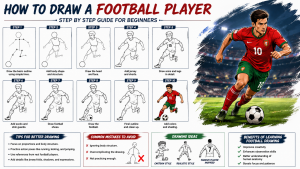
Understanding the Basics of Drawing a Football Player: How to Draw a Football Player Easily
Before starting your drawing, it is important to understand the basic structure of a football player. Football players usually have strong and athletic body shapes because of the physical nature of the sport.
A football player drawing typically includes:
- Athletic body proportions
- Football helmet
- Jersey and pants
- Shoulder pads
- Football shoes
- Football equipment
- Dynamic action poses
Studying real football players can help you understand their movements, posture, and body structure.
How to Draw a Football Player Step by Step
Learning how to draw a football player becomes easier when you break the process into simple steps.
Step 1: Draw Basic Body Guidelines
Start by creating simple shapes to build the body structure.
Draw:
- A circle for the head
- A line for the spine
- Basic shapes for the chest and hips
- Lines for arms and legs
These guidelines help maintain correct proportions and make the character look balanced.
Do not focus on details at this stage. The goal is to create the correct pose and body position.
Step 2: Create the Football Player’s Pose
Football players are usually shown in action, such as:
- Running with the ball
- Throwing a pass
- Preparing to tackle
- Blocking an opponent
- Standing in a ready position
Choose a pose that shows movement and energy. A dynamic pose can make your drawing look more realistic and exciting.
Pay attention to:
- Body angle
- Arm position
- Leg movement
- Balance and weight distribution
Step 3: Draw the Head and Helmet
The helmet is one of the most important parts of a football player’s appearance.
Start by drawing the basic shape of the helmet around the head. Add details such as:
- Face mask
- Helmet opening
- Team logo area
- Chin strap
For a realistic look, make sure the helmet follows the shape of the player’s head.
You can also add facial features like:
- Eyes
- Nose
- Mouth
- Facial expression
A focused or determined expression can make the player look more competitive.
Step 4: Add the Football Uniform
The uniform helps identify the character as a football player.
Draw important clothing details, including:
Jersey
Add:
- Team number
- Shoulder area
- Sleeves
- Fabric folds
Shoulder Pads
Football players wear protective shoulder pads that create a wider upper body appearance.
Pants and Socks
Add realistic folds and shapes to show movement.
Shoes
Football cleats should have a sporty design with visible spikes or textured soles.
Adding these details makes your football player drawing more authentic.
Step 5: Draw the Arms and Hands
Hands can be challenging, but they are important for creating realistic action.
Depending on the pose, the player may be:
- Holding a football
- Reaching for a pass
- Preparing for a tackle
Start with simple shapes before adding fingers and details.
If the player is holding a football, make sure the fingers wrap naturally around the ball.
Step 6: Draw the Football
The football is an important element of the artwork.
To draw a football:
- Create an oval shape.
- Add curved lines for the football texture.
- Draw the laces in the center.
- Add shading to create a three-dimensional effect.
The position of the football can help tell a story in your drawing.
Step 7: Add Details and Improve the Drawing
Once the basic drawing is complete, add more details to make it realistic.
Focus on:
- Jersey wrinkles
- Helmet reflections
- Muscle definition
- Equipment details
- Facial features
- Shoe design
Small details can make a simple drawing look professional.
Step 8: Add Shading and Colors
Shading helps create depth and makes the football player look three-dimensional.
Consider where the light source is coming from and add shadows accordingly.
You can add shadows on:
- Helmet areas
- Under the arms
- Jersey folds
- Legs
- Equipment
For coloring, choose realistic football team colors or create your own unique uniform design.
How to Draw a Football Player Like an Artist:
Improving your football drawings requires practice and observation.
Here are some helpful tips:
Study Real Football Players
Look at photos and videos of football players to understand body movement, uniforms, and poses.
Practice Human Anatomy
Learning basic human anatomy helps you create better body proportions.
Use Reference Images
Reference images can help with:
- Helmet designs
- Uniform details
- Player positions
- Equipment
Start With Simple Drawings
Beginners should focus on basic shapes before attempting highly detailed artwork.
Practice Different Poses
Drawing players in different actions improves your understanding of movement.
Common Mistakes When Drawing Football Players: How to Draw a Football Player Better
Many beginners make mistakes while creating sports characters.
Incorrect Body Proportions
Making the head too large or limbs too short can make the drawing look unrealistic.
Ignoring Perspective
Football players are often shown from different angles. Understanding perspective helps create depth.
Adding Too Many Details Too Early
Start with basic structure first, then add details gradually.
Forgetting Equipment
A football player should include important gear like helmets, pads, and cleats.
You can draw football players using different tools.
Traditional drawing tools include:
- Pencil
- Eraser
- Drawing paper
- Colored pencils
- Markers
Digital artists can use:
- Drawing tablets
- Digital brushes
- Illustration software
The tools are less important than practice and creativity.
Benefits of Learning How to Draw a Football Player
Learning how to draw a football player provides many creative benefits.
Improves Artistic Skills
Drawing athletes helps improve anatomy, movement, and character design skills.
Encourages Creativity
You can create unique players, uniforms, and football scenes.
Builds Observation Skills
Studying real players improves your ability to notice details.
Creates Sports Artwork
Football drawings can be used for posters, designs, school projects, and personal collections.
Frequently Asked Questions
Is drawing a football player difficult for beginners?
No. Beginners can learn by starting with basic shapes and gradually adding details.
What is the hardest part of drawing a football player?
Many artists find body proportions, hands, and action poses the most challenging parts.
Do I need professional drawing skills?
No. Anyone can learn with regular practice and patience.
Can I draw a cartoon football player?
Yes. Cartoon styles are often easier because they use simpler shapes and exaggerated features.
Conclusion
Learning how to draw a football player is a fun way to improve your artistic abilities while exploring your love for football. By understanding body structure, creating dynamic poses, adding realistic uniforms, and practicing regularly, you can create impressive football artwork.
Whether you are a beginner or an experienced artist, following step-by-step techniques will help you develop better drawings. With creativity and practice, you can design your own football players and bring exciting sports moments to life on paper.