
How to get my cat to drink more water is something every caring pet owner wonders about, especially when their feline friend seems to ignore the water bowl. Staying hydrated is essential for your cat’s overall health, yet many cats are surprisingly finicky about drinking. The good news is that with a few simple adjustments and a better understanding of your cat’s habits, you can easily encourage them to drink more and maintain their health. In this guide, I’ll share practical tips and expert insights to help you keep your furry companion happy and hydrated.
What You’ll Learn in This Article
Here’s a quick snapshot of the ideas we’ll cover:
- Why hydration is important for cats
- Common reasons felines avoid sipping
- How to gauge how much fluid your pet needs
- Practical techniques to encourage sipping
- Diet and hydration connections
- Signs of dehydration to watch for
- Avoiding mistakes that discourage drinking
- Recommended accessories and tools
- Expert advice and FAQs

Why Hydration is Critical for Cats
I’ve realized that keeping my kitty hydrated isn’t just about filling her dish daily. Adequate fluid intake is vital for her kidneys, digestion, and overall health. Unlike dogs, cats naturally drink less, but they still need moisture to keep their systems functioning smoothly.
Cats evolved as desert animals, getting much of their fluid needs from prey. Domesticated felines, however, often eat dry food, which contains much less moisture. This makes offering a variety of fluid sources essential to prevent dehydration and maintain kidney health.
Why Some Felines Avoid Sipping
I’ve noticed that my cat won’t always go near her dish. This behaviour can have several causes:
-
Dish Cleanliness
Cats are sensitive to the cleanliness of their drinking station. Dust, fur, or even water left too long can deter them from sipping.
-
Location of the Drinking Station
A noisy washing machine or high-traffic area can make your pet anxious. Cats prefer calm environments, so where the vessel sits matters.
-
Dish Type
Sometimes, the material of the container affects the water’s taste or smell. Plastic can impart odours cats dislike, so ceramic or stainless-steel vessels often work better.
-
Health Issues
Dental pain, gastrointestinal upset, or kidney problems can make drinking uncomfortable or unappealing. Always check with a vet if your pet’s liquid intake changes suddenly.
How Much Fluid Does My Pet Need?
I’ve learned it helps to have a benchmark. On average, cats require around 4 ounces of liquid per 5 pounds of body weight daily, but this amount can vary. Dry food contains about 10% moisture, whereas moist or canned meals may contain up to 70%. This means a cat eating mainly wet food may drink far less additional liquid.
Tip: I measure how much I pour into her dish in the morning and check later to estimate intake. However, remember that cats may drink from unexpected sources—faucets, puddles, or even water in your glass.
Creative Ways to Encourage Drinking
If your feline isn’t sipping enough, there are gentle, clever ways I’ve found that work without forcing her.
-
Multiple Drinking Stations
Placing several vessels around the home encourages exploration and gentle sipping. I keep one in a quiet corner, another near her sleeping area, and one close to her food station.
-
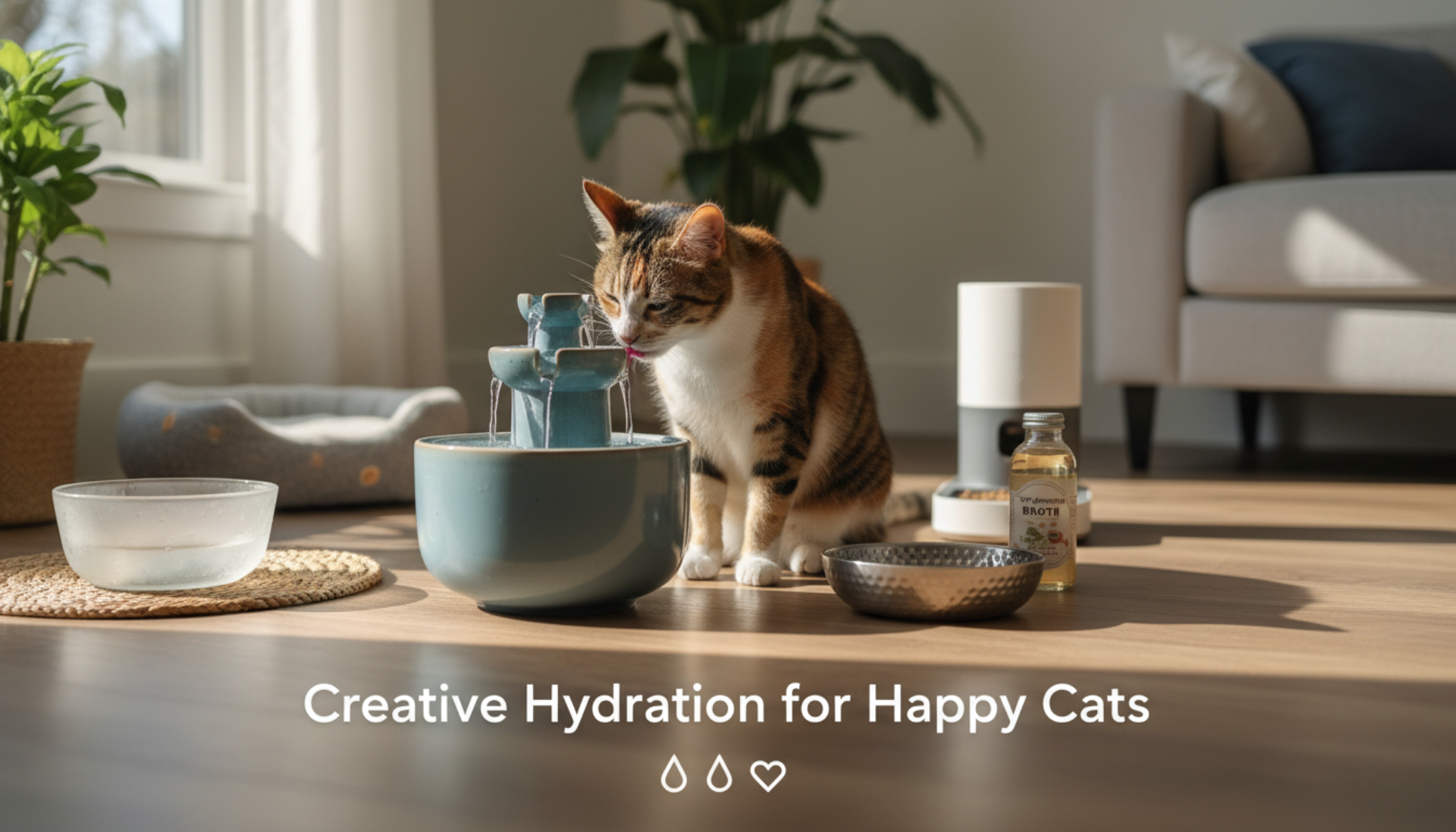
Vary the Vessel Type
Sometimes, the vessel itself matters. I experimented with ceramic bowls, glass cups, and stainless-steel containers. Each cat is different, so test a few options.
-
Running Water
Many felines prefer moving liquid. I invested in a water fountain for cats, and my kitty started sipping more often. This option keeps fluid fresh without leaving a dish untouched for too long.
-
Add Flavour or Texture
Adding low-sodium chicken broth, tuna juice, or specially formulated feline liquid supplements can make hydration appealing. Just be sure the addition is safe and vet-approved.
-
Temperature and Freshness
Cats can be particular about liquid temperature. I keep her bowls in a cool spot and refill them daily to ensure freshness.
Diet and Hydration
My research revealed a strong connection between diet and hydration. Cats eating dry kibble need to drink more fluids to compensate, while canned food helps meet their moisture needs naturally.
Tip: Mixing wet food with a small amount of warm water can increase both hydration and flavour appeal. I’ve found this works wonders for picky drinkers. Also, some vets recommend specially formulated diets for cats prone to urinary or kidney issues. Discuss diet changes with your veterinarian to ensure nutritional needs are met.
Signs of Insufficient Hydration
I pay attention to my cat’s behaviour for subtle warning signs of dehydration, including
- Dry or tacky gums
- Sunken eyes
- Reduced skin elasticity (skin that doesn’t bounce back quickly)
- Constipation
- Lethargy or decreased appetite
- Frequent vomiting or diarrhea
If these signs persist, it’s essential to consult a veterinarian immediately. Dehydration in cats can develop quickly and be dangerous.
Avoiding Common Mistakes
I’ve made a few mistakes before—and learned from them. Here’s what I avoid now:
- Leaving water for too long without refreshing
- Using plastic dishes that trap odours
- Keeping drinking stations in noisy or stressful areas
- Forcing hydration, which can cause resistance
- Ignoring subtle signs of decreased liquid intake
A mindful approach ensures my cat drinks naturally, without stress.
Tools and Accessories to Help
I’ve found several tools that make hydration easier:
- Cat water fountains—encourage drinking and keep water fresh
- Wide dishes—cats dislike whiskers touching bowl edges
- Automatic refilling bowls—handy for busy pet owners
- Water additives—safe flavour enhancers recommended by vets
These tools are useful, but they work best combined with an understanding of your cat’s unique preferences.
Expert Tips I’ve Picked Up
Here are a few additional tips I’ve learned from fellow cat owners and vets:
- Rotate water locations occasionally to spark curiosity
- Introduce new drinking vessels gradually
- Keep drinking stations away from litter boxes and feeding areas
- Encourage gentle sipping by offering small amounts of liquid frequently
- Monitor water intake as part of your cat’s health routine
FAQs
Q1: How do I know if my cat is getting enough liquid?
A: Watch for normal urination, healthy skin, and alert behaviour. Keep a daily log if needed.
Q2: Can adding broth harm my cat?
A: Only if the broth contains salt, onion, garlic, or harmful additives. Use vet-approved, low-sodium options.
Q3: Is it okay to let my cat drink from the faucet?
A: Generally, yes, as long as the water is safe and clean. Many cats enjoy the novelty of running liquid.
Conclusion
I’ve learned that keeping my kitty hydrated requires observation, patience, and a touch of creativity. Cats are unique in their drinking habits, but by understanding their needs and environment, you can encourage healthy hydration without stress. Remember—it’s not just about offering liquid; it’s about creating a safe, inviting space for your feline to sip naturally. With the right techniques, you can keep your pet happy, healthy, and well hydrated for years to come.