
When I talk to homeowners about saving energy, I often start with one question: “What’s controlling your heat pump?”
Because honestly, even the most efficient heat pump can underperform if the thermostat isn’t doing its job right. That’s why choosing a smart thermostat for heat pump systems can make all the difference.
A smart thermostat is more than a fancy wall gadget with a glowing display. It’s a digital assistant that quietly optimizes your home’s comfort while monitoring energy use. It doesn’t just wait for you to make the first move—it studies your daily patterns and reacts before you even touch a button.
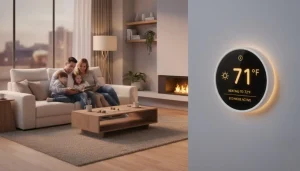
Imagine waking up on a cold morning, and your living room is already warm—because your thermostat knew what time you’d be up. Or think about leaving for work and realizing you forgot to adjust the settings. No problem—you can do it right from your phone. That’s the convenience a smart thermostat for a heat pump provides.
But the real advantage isn’t just convenience—it’s intelligence. Smart thermostats communicate directly with your heat pump, learning how long it takes to reach a set temperature and adjusting in real time. Instead of simple on/off cycles, they fine-tune the operation, saving you energy and extending your system’s life.
In short, the thermostat becomes the brain of your home’s climate control. It decides when to run, how hard to run, and when to rest—all based on your comfort preferences and the outside conditions. And if you pair it with a learning model like the Nest or a responsive one like the Honeywell touchscreen, the results can be impressive: consistent comfort, lower bills, and less guesswork.
Here’s why I think every modern heat pump deserves a smart thermostat:
- Precision: It eliminates those annoying temperature swings that come with older thermostats.
- Connectivity: You can adjust it remotely from anywhere in the world.
- Efficiency: It reduces unnecessary energy use—good for your wallet and the planet.
- Automation: It learns your habits, so you don’t have to think about it.
- Comfort: It ensures your home always feels “just right,” no matter the season.
A smart thermostat doesn’t just control temperature—it manages comfort as if it’s reading the room (literally). And for heat pumps, which already operate differently from traditional HVAC systems, this pairing is almost made to be.
Meaning of Thermostatic in Smart Thermostat for Heat Pump
The meaning of thermostatic in smart thermostat for heat pump is simpler than it sounds. At its core, “thermostatic” describes the thermostat’s ability to automatically regulate your home’s temperature. Instead of you constantly fiddling with the dial or app, a thermostatic device senses changes in the indoor environment and responds on its own.
In the context of a smart thermostat for a heat pump, this takes on an extra layer of convenience. Heat pumps work efficiently when the temperature is managed carefully, and a smart thermostat ensures your home stays comfortable without sudden spikes or drops in temperature. Think of it as a silent, reliable assistant who notices when your living room is getting a little too warm or your bedroom is a tad chilly—and quietly fixes it before you even realize.
Understanding the meaning of thermostatic in a smart thermostat for a heat pump also helps highlight why “smart” is such a game-changer. The thermostat doesn’t just react to temperature changes—it learns your daily routines, understands your comfort preferences, and optimizes energy usage. Over time, it becomes almost intuitive, making sure your home is just the right temperature when you want it to be.
So, the next time you see “thermostatic” on a thermostat’s feature list, remember it’s more than a technical term. It defines how intelligently your smart thermostat manages your comfort. And when combined with the learning capabilities of a smart device, it’s like having a personal climate assistant that’s always a step ahead.
Smart Thermostat for Heat Pump and How It Works
I like to think of a smart thermostat as a translator between your preferences and your heat pump’s capabilities. Traditional thermostats are command-based — you tell them what to do, and they do it. Smart thermostats, however, take initiative.
They connect to Wi-Fi, track your energy use, and learn your daily patterns. For example, if you lower your temperature before bed every night at 10, a smart thermostat will start doing it automatically. Over time, it anticipates your needs — heating up your home just before you wake up, and saving energy while you’re out.
In a heat pump setup, it also manages one crucial task: switching between heating and cooling modes efficiently. Since heat pumps reverse the flow of refrigerant, the thermostat has to handle this change without delay. Smart thermostats do it seamlessly (and yes, faster than I can find the TV remote).
Benefits of Using a Smart Thermostat for Heat Pump
Let’s talk about the “why.” Why upgrade to a smart thermostat if your current one seems fine?
Here’s what I’ve noticed after testing and installing dozens of them:
- Energy Efficiency: Smart thermostats cut energy waste by learning your habits and running your system only when needed. Some users save up to 15% annually on heating and cooling costs — not bad for a device that fits in your palm.
- Remote Control: You can control the thermostat from your phone. Forgot to lower the heat before leaving for work? No problem — just open the app.
- Comfort Personalization: It learns your routine, so you come home to the perfect temperature every day. A simple detail that transforms everything.
- Energy Reports: Some models send monthly usage summaries. They’re great for keeping tabs on what’s driving your energy bill.
- Smart Home Integration: Pair it with Alexa, Google Assistant, or Apple HomeKit — and suddenly, your comfort responds to your voice.
Smart thermostats aren’t just about convenience; they’re about understanding your space.
Nest Learning Thermostat Manual – A Smart Choice for Heat Pump Users
When people ask me which smart thermostat I’d personally recommend, the Nest Learning Thermostat is always my top pick. Here’s why it stands out, especially for heat pump users:
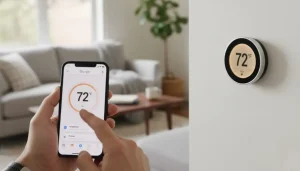
- It truly learns your schedule: Nest observes when you wake up, leave the house, return, and go to bed. Over time, it builds a personalized heating and cooling schedule without any traditional programming.
- Automatic heat pump management: The thermostat supports reversing valve control, manages emergency heat, and ensures your heat pump runs efficiently for comfort and energy savings.
- Home and away detection: Using sensors and your phone’s location, Nest knows when you’re home or away and adjusts the heat pump accordingly — so you’re never heating an empty house.
- Easy smartphone connection: You can set up Nest in minutes. Once connected, you can monitor and control your thermostat from anywhere.
- Energy-saving insights: Nest provides reports and suggestions to help reduce energy use, so you stay comfortable while saving on your bills.
- Elegant, modern design : Beyond functionality, the Nest looks great on the wall — a sleek piece of tech that blends into your home.
- Intuitive and effortless : Many homeowners are surprised at how smart it feels. Instead of programming schedules manually, Nest gradually learns your preferences just by watching your routine.
For anyone with a heat pump, the Nest Learning Thermostat doesn’t just make life easier — it almost feels like it’s thinking along with you
Honeywell Touchscreen Thermostat: Affordable Smart Choice
If you prefer a more hands-on approach to managing your heat pump, the Honeywell Touchscreen Thermostat is a solid, reliable, and budget-friendly choice. Honeywell has decades of experience in thermostats, and their touchscreen models bring together classic reliability and modern smart features.

Here’s what makes this thermostat stand out for heat pump users:
- Intuitive touchscreen interface
The clean touchscreen lets you swipe, tap, and adjust temperature with precision. Even if you aren’t particularly tech-savvy, the layout is straightforward to navigate. - Full heat pump compatibility
It handles multiple stages of heating and cooling, supports emergency heat, and manages fine temperature adjustments with ease — perfect for keeping your home comfortable year-round. - Customizable control
You can set schedules, adjust fan operation, or override settings manually. This makes it ideal for those who enjoy manual control with a smart edge. - Energy efficiency features
Many Honeywell touchscreen models include energy-saving modes and tips, helping you reduce electricity use without sacrificing comfort. - Reliable and affordable
Unlike some ultra-premium thermostats, Honeywell offers consistent performance at a price point that makes sense. You don’t have to compromise quality for cost. - Simplicity meets smart tech
The balance of touchscreen convenience with traditional thermostat control is what I love most. It gives you flexibility without overwhelming you with complicated features.
For anyone who wants a thermostat that combines ease of use, reliability, and smart functionality, the Honeywell Touchscreen Thermostat hits the sweet spot — especially for heat pump systems.
How to Program a Honeywell Thermostat Step by Step
Programming a thermostat might sound complicated, but the Honeywell models make it surprisingly easy.
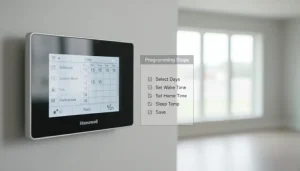
Here’s my quick rundown:
- Access the Menu: Tap “Menu” and choose “Schedule.”
- Select the Mode: Choose heating or cooling (depending on the season).
- Set Time Periods: Morning, day, evening, and night — you can personalize each.
- Adjust Temperatures: Choose your preferred comfort levels for each time slot.
- Save & Exit: The thermostat takes it from there.
If your system has a two-stage heat pump, ensure you enable the “multi-stage” option. That way, the thermostat manages both stages efficiently.
Once programmed, you can control it via Wi-Fi, which is perfect if you like tweaking settings without leaving the sofa.
Install Thermostat Correctly for Heat Pump Efficiency
Installing a thermostat isn’t exactly rocket science, but trust me, doing it right makes a huge difference in your heat pump efficiency. I’ve learned (sometimes the hard way) that placement and setup can make or break how efficiently your system heats or cools your home. A poorly placed thermostat can cause your heat pump to work overtime, spike your energy bills, or leave you shivering in the winter.
Here’s what I recommend:
Choose an Interior Wall: Keep your thermostat away from exterior walls, direct sunlight, or vents. Exterior walls can be influenced by outside temperatures, sunlight can trick your thermostat into thinking it’s warmer than it is, and vents can make it think your home is hotter or colder than reality.
Keep It Central: Think of your thermostat as the “temperature reporter” for your entire home. Placing it centrally ensures it reflects the average temperature of your living space, rather than just one corner.
Mind the Height: Eye level is ideal. Too high, and it reads warmer air near the ceiling; too low, and it measures cooler air near the floor. Correct height means more accurate readings and a more comfortable home.
Avoid Obstructions: Don’t hide your thermostat behind furniture, curtains, or electronics. Anything that blocks airflow or emits heat can cause inaccurate readings, making your heat pump work harder than necessary.
Consider the Flow: Keep it away from kitchens, fireplaces, or rooms that get unusually hot or cold. You want your thermostat to sense your typical living space temperature, not the temperature near a stovetop.
And a couple of crucial reminders –
Turn Off the Power: I can’t stress this enough — flipping the breaker off before installation isn’t optional. Working on live wires is dangerous and not worth the risk.
Professional Help Is Smart: If wiring or placement feels confusing, call a pro. A small mistake can cost more in energy bills and repairs than a few minutes of professional advice.
When installed correctly, your thermostat will keep your heat pump running efficiently, maintain consistent comfort, and even save money on energy bills. It’s a small step that makes a big difference — your future self (and your wallet) will thank you.
Smart Thermostat Placement and Common Setup Mistakes
Installing a smart thermostat is just the first step — where you place it can make a huge difference in how well it controls your heat pump or HVAC system. I’ve seen plenty of homeowners get frustrated because their thermostat readings were off, and often it comes down to placement mistakes.
A well-placed thermostat ensures your system runs efficiently. It delivers consistent comfort, reduces unnecessary short cycling, and helps you get the most out of your energy usage. Here’s what to consider:
Avoid drafty spots : Placing your thermostat near windows, doors, or areas prone to drafts can cause false readings. Your system might work harder than needed, or worse, fail to heat or cool properly
Keep it away from heat sources: Kitchens, radiators, direct sunlight, or even lamps can trick your thermostat into thinking your home is warmer than it really is. This can lead to uneven heating or cooling.
Don’t block airflow: Avoid installing near vents, fans, or doorways where sudden air movement can cause spikes in temperature detection.
Height matters: Mounting the thermostat too high or too low can skew readings. The ideal height is roughly 5 feet (1.5 meters) from the floor, around the average breathing zone.
Consider zoned homes carefully: If your home has multiple zones, make sure each thermostat accurately reflects the temperature in its respective area. One misplaced thermostat can throw off the comfort balance across your entire home.
Check for nearby obstructions : Avoid placing it behind furniture, curtains, or in recessed areas where the thermostat can’t “sense” the room properly.
By paying attention to these details, you ensure your smart thermostat performs as intended — keeping your home comfortable, your heat pump efficient, and your energy bills under control.
Smart Thermostat Maintenance and Energy Savings Tips
Even the smartest devices need a little attention to perform at their best. I’ve found that a few simple maintenance habits go a long way in keeping a smart thermostat running efficiently while helping save energy. Here’s how I do it:
Check for Firmware Updates: Manufacturers often provide updates to enhance performance, introduce new features, and resolve any issues. Regularly updating your thermostat ensures it stays smart, responsive, and compatible with your heat pump or HVAC system.
Clean Around the Sensors
Dust, dirt, and debris can interfere with temperature readings. I gently wipe around the thermostat sensors and the surrounding wall area to make sure it stays accurate. Even a little dust buildup can cause the system to heat or cool unevenly.
Review Energy Reports Monthly
Many smart thermostats provide monthly energy usage reports. I check these reports to spot patterns, adjust schedules, and make small changes that reduce energy consumption without sacrificing comfort. Over time, these insights really add up.
Replace Batteries (if applicable)
Some thermostats still rely on backup power sources, such as batteries. I make a habit of checking them regularly to avoid unexpected shutdowns. A dead battery might not seem like a big deal, but it can throw off your schedule and efficiency.
Optimize Seasonal Settings
Adjust your thermostat slightly for seasonal changes — a few degrees cooler in summer or warmer in winter can make a noticeable difference in energy bills while keeping comfort levels steady.
By following these simple habits, you’ll notice smoother temperature control, longer-lasting device performance, and consistent energy savings. Maintaining your smart thermostat isn’t complicated — but it’s definitely worth it
Best Smart Thermostat for Heat Pump: Final Thoughts
Choosing the best smart thermostat for heat pump setups isn’t about finding the fanciest gadget — it’s about matching your lifestyle.
If you love automation and a “set it and forget it” experience, the Nest Learning Thermostat is ideal. If you prefer control at your fingertips, go for the Honeywell Touchscreen Thermostat.
Either way, investing in a smart thermostat means investing in comfort, convenience, and energy awareness.
It’s one of those upgrades that quietly improve daily life — like heated seats in a car. You don’t realize how much you’ll appreciate it until you’ve tried it.