
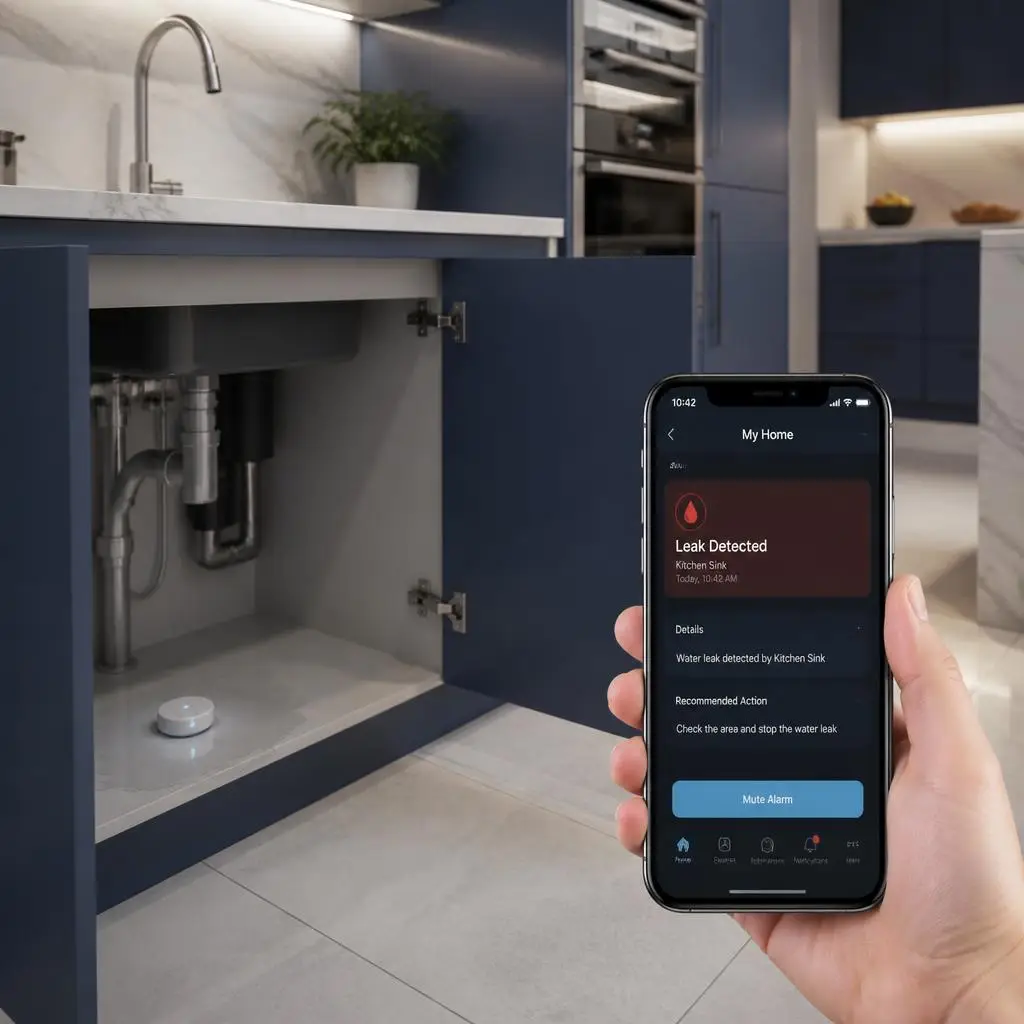
Water damage is one of the most expensive and unexpected problems homeowners face. A small leak under a sink or behind a washing machine can quickly turn into a major repair if it goes unnoticed. Fortunately, the best water leak sensors for smart homes provide an easy and affordable way to detect leaks before they cause serious damage.
Unlike traditional leak alarms, smart water leak sensors connect to your Wi-Fi or smart home system. As a result, they send instant alerts directly to your smartphone whenever they detect water. Some advanced models even work with automatic water shut-off valves, helping prevent flooding even when you’re away from home.
Whether you’re upgrading your smart home or simply looking for extra peace of mind, choosing the right leak sensor can save you thousands of dollars in repair costs. In this guide, we’ll explore the best water leak sensors for smart homes, compare their key features, and help you choose the ideal option for your needs.
Quick Comparison: Best Water Leak Sensors for Smart Homes
| Water Leak Sensor | Best For | Connectivity | Mobile Alerts | Voice Assistant |
|---|---|---|---|---|
| Govee Water Leak Detector | Budget-Friendly Homes | Wi-Fi | ✅ | Alexa, Google Assistant |
| YoLink Water Leak Sensor | Long-Range Coverage | LoRa | ✅ | Alexa |
| Aqara Water Leak Sensor | Smart Home Automation | Zigbee | ✅ | Alexa, Google Home, Apple Home |
| Ring Flood & Freeze Sensor | Ring Ecosystem | Z-Wave | ✅ | Alexa |
| Shelly Flood Sensor | Advanced Users | Wi-Fi | ✅ | Alexa, Google Home |
Why You Need a Smart Water Leak Sensor
Water leaks often start small. However, even a slow drip can damage flooring, walls, furniture, and electrical systems over time. Because many leaks occur in hidden areas, homeowners may not notice the problem until significant damage has already occurred.
A smart water leak sensor continuously monitors areas that are most vulnerable to leaks. Once it detects moisture, it immediately sends a notification to your smartphone. Consequently, you can respond before a minor issue becomes a costly repair.
Some premium models go even further by triggering smart home routines or automatically shutting off your home’s water supply. Therefore, they offer an extra layer of protection when you’re travelling or away from home.
Common Places to Install Water Leak Sensors
For maximum protection, place sensors near:
- Under kitchen sinks
- Bathroom cabinets
- Washing machines
- Dishwashers
- Water heaters
- Basements
- HVAC systems
- Refrigerators with water lines
- Sump pumps
- Toilets
Installing sensors in these locations significantly improves your chances of detecting leaks early.
How We Selected the Best Water Leak Sensors
Not every water leak sensor performs the same. Therefore, we evaluated each product using several important factors.
Our selection considered:
- Detection speed
- Mobile app quality
- Smart home compatibility
- Battery life
- Connectivity reliability
- Ease of installation
- Automation features
- Overall value for money
- Customer reviews and long-term reliability
As a result, every recommendation below offers dependable performance for modern smart homes. Best Smart Home Security Devices
1. Govee Water Leak Detector – Best Overall
Key Features
- Wi-Fi connectivity
- Instant smartphone notifications
- Loud 100 dB alarm
- Long battery life
- Supports multiple sensors
- Easy DIY installation
Pros
- Affordable pricing
- Reliable app notifications
- No professional installation required
- Excellent value for most homeowners
Cons
- Advanced automation options are somewhat limited compared to premium ecosystems.
Why We Recommend It
The Govee Water Leak Detector strikes an excellent balance between price, reliability, and ease of use. Because setup only takes a few minutes, it’s an excellent choice for beginners as well as experienced smart home users.
Furthermore, the loud built-in alarm helps family members hear leaks even if internet connectivity is temporarily unavailable.
Best For: Most homeowners looking for dependable leak protection.
2. YoLink Water Leak Sensor – Best Long-Range Performance
Key Features
- LoRa wireless technology
- Extremely long wireless range
- Fast push notifications
- Supports dozens of sensors
- Multi-year battery life
Pros
- Outstanding range for large homes
- Reliable communication
- Low power consumption
- Excellent for detached garages and basements
Cons
- Requires a YoLink Hub.
Why We Recommend It
If you own a large property, the YoLink Water Leak Sensor is difficult to beat. Unlike standard Wi-Fi sensors, LoRa technology provides excellent coverage across long distances.
Consequently, it remains connected even in locations where traditional Wi-Fi signals become weak.
Best For: Large homes, warehouses, and multi-story buildings.
3. Aqara Water Leak Sensor – Best for Smart Home Automation
Key Features
- Zigbee connectivity
- Compact waterproof design
- Apple Home support
- Alexa compatibility
- Google Home compatibility
- Automation with Aqara Hub
Pros
- Excellent automation capabilities
- Small and discreet
- Energy efficient
- Reliable Zigbee connection
Cons
- Requires an Aqara Hub.
Why We Recommend It
For users who enjoy creating smart home automations, the Aqara Water Leak Sensor offers exceptional flexibility. For example, you can create routines that turn on lights, send alerts, or activate compatible devices whenever a leak is detected.
Additionally, its compact design makes it easy to place in tight spaces where leaks commonly occur.
Best For: Smart home enthusiasts who already use Zigbee devices.
4. Ring Flood & Freeze Sensor – Best for Ring Users
Key Features
- Flood detection
- Freeze temperature monitoring
- Z-Wave connectivity
- Ring app integration
- Alexa support
Pros
- Great addition to Ring Alarm systems
- Easy installation
- Reliable notifications
- Temperature monitoring helps prevent frozen pipes
Cons
- Best performance requires the Ring Alarm ecosystem.
Why We Recommend It
If your home already uses Ring security products, this sensor integrates seamlessly with the existing system. Besides detecting water leaks, it also monitors freezing temperatures that could burst pipes during winter.
Therefore, it’s a valuable addition to any Ring-based smart home.
What to Look for Before Buying a Water Leak Sensor
Choosing the right device depends on your home’s layout and your existing smart home setup. Before making a purchase, consider the following factors:
Connectivity
Different sensors use different communication methods, including:
- Wi-Fi
- Zigbee
- Z-Wave
- LoRa
If you already own a smart home hub, selecting a compatible sensor will simplify installation and improve automation.
Mobile Notifications
Instant alerts are one of the most valuable features. Therefore, choose a sensor with a reliable mobile app that delivers fast notifications wherever you are.
Battery Life
Most quality sensors offer one to three years of battery life. Nevertheless, checking battery status regularly helps ensure continuous protection.
Water Detection Accuracy
A quality sensor should detect even small amounts of water. Faster detection means less damage and lower repair costs.
5. Shelly Flood Sensor – Best for Advanced Smart Home Users
The Shelly Flood Sensor is an excellent choice for homeowners who want greater control over their smart home automation. Unlike many basic leak detectors, it integrates with various smart home platforms and allows users to create custom automation routines. Therefore, it is ideal for tech-savvy users who enjoy building a fully connected smart home.
Key Features
- Wi-Fi connectivity
- Real-time smartphone alerts
- Temperature monitoring
- Long battery life
- Compact and lightweight design
- Supports advanced automation
Pros
- No dedicated hub required
- Easy to integrate with automation platforms
- Accurate water detection
- Flexible smart home control
Cons
- Initial setup may be slightly challenging for beginners.
Why We Recommend It
If you already use multiple smart home devices, the Shelly Flood Sensor offers outstanding flexibility. Additionally, it allows you to automate actions such as turning off compatible smart valves or sending multiple notifications when a leak occurs.
Best For: Advanced users and smart home enthusiasts. See more
Water Leak Sensor Buying Guide
Choosing the best water leak sensor for your smart home involves more than simply comparing prices. Instead, consider how the device fits into your existing smart home ecosystem and daily needs.
1. Smart Home Compatibility
Before purchasing, check whether the sensor works with:
- Amazon Alexa
- Google Home
- Apple Home
- Samsung SmartThings
- Home Assistant
Buying a compatible sensor ensures smoother automation and easier management.
2. Notification Speed
Fast notifications can significantly reduce water damage. Therefore, choose a device that sends alerts within seconds after detecting moisture.
3. Battery Life
Replacing batteries too often can become inconvenient. Fortunately, many high-quality sensors provide battery life ranging from one to five years.
4. Detection Accuracy: A reliable sensor should detect even a few drops of water. Early detection helps prevent expensive repairs and protects valuable belongings.
5. Expandability
Many systems allow multiple sensors to connect to a single hub or mobile app. As a result, you can monitor every high-risk area in your home from one dashboard.
Wi-Fi vs Zigbee vs Z-Wave vs LoRa
Choosing the right wireless technology is just as important as selecting the sensor itself.
| Technology | Advantages | Best For |
|---|---|---|
| Wi-Fi | No hub required, simple installation | Small homes |
| Zigbee | Fast, energy-efficient, reliable | Smart home automation |
| Z-Wave | Stable and secure | Ring and SmartThings users |
| LoRa | Extremely long range | Large homes and garages |
Each technology has its strengths. Therefore, select the one that best matches your home’s size and existing smart devices.
Common Mistakes to Avoid
Many homeowners purchase excellent leak sensors but fail to install them effectively. To maximize protection, avoid these common mistakes.
Installing Too Few Sensors
One sensor near the kitchen sink is not enough. Instead, protect every high-risk area.
Ignoring Battery Notifications
A dead battery means no protection. Therefore, replace batteries as soon as your app sends a warning.
Poor Placement
Do not place sensors where water cannot easily reach the detection contacts.
Skipping App Updates
Manufacturers regularly improve security and performance through software updates. Keeping the app updated ensures reliable operation.
Forgetting to Test Sensors
Testing your sensors every few months confirms they are still functioning correctly.
Frequently Asked Questions
Are smart water leak sensors worth buying?
Yes. A quality water leak sensor can detect leaks early, helping homeowners avoid expensive repairs and insurance claims. Considering the potential cost of water damage, it is a worthwhile investment.
Where should I place a water leak sensor?
The best locations include:
- Under sinks
- Near washing machines
- Behind refrigerators
- Around water heaters
- Near dishwashers
- In basements
- Around sump pumps
- Near HVAC systems
These areas are among the most common sources of household water leaks.
Do water leak sensors work without Wi-Fi?
Some models can still sound a local alarm without Wi-Fi. However, internet connectivity is usually required for remote smartphone notifications.
How many water leak sensors do I need?
The number depends on your home’s size. Most homeowners benefit from installing five to ten sensors throughout high-risk locations.
Can water leak sensors prevent flooding?
While sensors cannot stop leaks by themselves, they provide early warnings. Moreover, when paired with an automatic water shut-off valve, they can significantly reduce or even prevent flood damage.
Final Thoughts
Water leaks often begin without warning. However, the right smart water leak sensor can alert you before a minor problem becomes a costly disaster. Whether you need a simple Wi-Fi sensor or a fully automated smart home solution, investing in reliable leak detection adds an important layer of protection.
Among the options discussed, the Govee Water Leak Detector is an excellent all-around choice for most homeowners because it combines affordability, reliability, and ease of use. On the other hand, if you already have a smart home ecosystem, devices from Aqara, Ring, YoLink, or Shelly may provide better integration and advanced automation features.
Ultimately, the best water leak sensors for smart homes are those that fit your home’s layout, work with your preferred smart home platform, and deliver fast, dependable alerts. By choosing the right device today, you can protect your home, reduce repair costs, and enjoy greater peace of mind for years to come.