
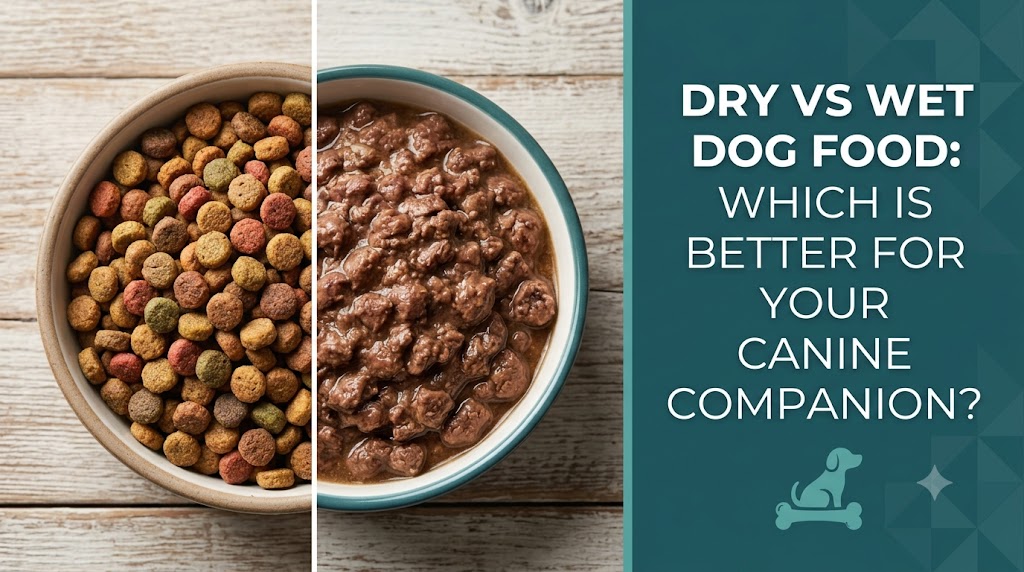
Standing in the pet food aisle can quickly feel overwhelming. Rows of colourful bags and shiny cans promise superior nutrition, leaving many pet parents asking the exact same question: when comparing dry vs wet dog food, which option truly delivers the best health outcomes for your pup?
Choosing the right diet is one of the most critical decisions you will make for your pet’s daily health. After all, proper nutrition directly influences energy levels, coat shine, digestive health, and long-term lifespan. While both kibble and canned options can offer complete and balanced nutrition, they differ significantly in texture, moisture content, price, and convenience.
In this comprehensive guide, we will unpack the pros and cons of both diet types, explore how your dog’s lifestyle impacts their nutritional needs, and help you determine which bowl contents fit your household best.
Understanding Dry Dog Food (Kibble)
Dry dog food, commonly known as kibble, remains the most popular feeding choice among pet owners worldwide. It is manufactured through a process called extrusion, where fresh and dry ingredients are mixed into a dough, cooked under high pressure, and shaped into small bites before being dried and cooled.
Key Benefits of Dry Kibble
-
Convenience and Long Shelf Life: Kibble is remarkably easy to store. Because it contains very little moisture (typically around 10%), it can stay fresh in a sealed container or bag for months without refrigeration.
-
Dental Health Support: The mechanical action of chewing crunchy kibble helps reduce plaque and tartar buildup on your dog’s teeth. Consequently, kibble is frequently recommended by veterinarians to maintain basic oral hygiene alongside regular brushing.
-
Cost-Effectiveness: Generally, dry food offers the lowest cost per serving. For large breed dogs or multi-dog households, feeding kibble provides substantial financial savings over time.
-
Ideal for Enrichment: You can easily load dry kibble into puzzle toys, snuffle mats, and training dispensers. Therefore, it doubles as an excellent tool for mental stimulation during daily training routines.
Potential Drawbacks of Dry Kibble
-
Low Moisture Content: Dry food lacks natural hydration. Consequently, dogs on an all-kibble diet must drink plenty of fresh water to maintain proper kidney and urinary tract health.
-
Less Palatable for Picky Eaters: Kibble relies on sprayed-on fats for aroma and taste. Highly selective eaters or ageing dogs with diminished sense of smell may find dry bites unappealing.
-
Preservatives and Processing: To ensure a long shelf life, dry foods often contain natural or synthetic preservatives and require carbohydrates to hold the kibble shape during extrusion.
Exploring Wet Dog Food (Canned Food)
Wet dog food comes in cans, pouches, or foil trays. The ingredients—typically real meats, grains, vegetables, and gravies—are blended, sealed in containers, and cooked at high temperatures to preserve freshness without artificial additives.

Key Benefits of Wet Food
-
High Moisture Content: Wet food typically contains 70% to 80% water. This high hydration level supports kidney function, helps prevent urinary tract infections, and keeps your dog feeling full longer.
-
Superior Taste and Texture: The rich meat aromas and tender gravy textures are nearly irresistible to dogs. As a result, wet food is a saviour for sick pets, picky eaters, or dogs recovering from surgery.
-
Easier to Chew: Senior dogs suffering from missing teeth, gum sensitivity, or jaw arthritis can consume wet food easily without painful crunching.
-
Higher Protein and Lower Carbohydrates: Many premium canned formulas contain higher percentages of animal protein and healthy fats compared to traditional kibble options.
Potential Drawbacks of Wet Food
-
Higher Overall Cost: Canned food is significantly more expensive per calorie than dry kibble, especially if you feed a giant breed like a Great Dane or Mastiff.
-
Refrigeration Requirements: Once opened, unused wet food must be covered and refrigerated immediately, and it should be consumed within 2 to 3 days.
-
No Dental Abrasion: Because wet food is soft, it offers zero abrasive action against dental plaque. Over time, an exclusive wet diet may require more frequent professional dental cleanings.

Analysing Dry vs Wet Dog Food: A Direct Comparison
To clearly understand how these two food types compare across key categories, let’s examine their core characteristics side by side:
| Feature | Dry Dog Food (Kibble) | Wet Dog Food (Canned/Pouches) |
| Moisture Content | Low (~10%) | High (70% – 80%) |
| Shelf Life (Unopened) | Very Long (12+ months) | Long (2-3 years) |
| Shelf Life (Opened) | 4-6 weeks in sealed bin | 2-3 days (Refrigerated) |
| Dental Impact | Helps scrub plaque | No mechanical cleaning action |
| Aroma & Palatability | Moderate | Very High |
| Cost Per Serving | Economical | Premium |
| Best For | Active dogs, busy owners, training | Seniors, picky eaters, kidney health |
Factors to Consider When Choosing the Best Dog Food
Every dog possesses unique nutritional requirements. Rather than searching for a universal winner, evaluate the following factors to determine which choice fits your dog’s lifestyle best:
1. Age and Life Stage
Puppies require dense calories and specific calcium-to-phosphorus ratios to support rapid bone growth. Senior dogs, on the other hand, often benefit from the extra hydration and soft texture of wet food as their metabolism slows down.
Pro Tip: Always check the package label for an official statement from the Association of American Feed Control Officials (AAFCO) confirming that the recipe provides complete and balanced nutrition for your dog’s specific life stage.
2. Dental Health and Oral Care
If your dog is prone to periodontal disease, dry kibble or specialised dental kibble diets can provide daily mechanical scraping. However, kibble alone cannot replace regular toothbrushing and annual veterinary checkups. You can learn more about developing a comprehensive dental routine in our detailed dog nutritional needs overview.
3. Hydration Levels and Medical Conditions
Does your dog drink enough water throughout the day? Dogs with a history of bladder stones, kidney issues, or chronic urinary tract infections benefit immensely from the high water content found in canned meals.
4. Household Budget and Dog Size
Feeding an 80-pound Golden Retriever exclusively on high-end canned food can cost hundreds of dollars each month. Balancing high-quality nutrition with your household budget is essential for long-term consistency.
The Best of Both Worlds: Mixed Feeding Strategy
Can’t decide between dry vs wet dog food? You don’t actually have to pick just one! Many veterinary nutritionists recommend combining both diet types to maximise health benefits while keeping costs manageable.
Benefits of Mixing Wet and Dry Food
-
Enhanced Palatability: Adding a scoop of warm wet food as a topper turns standard dry kibble into an exciting meal.
-
Improved Hydration: The added liquid from canned food boosts your dog’s daily moisture intake without requiring them to drink gallons of plain water.
-
Controlled Feeding Costs: By using kibble as the foundational calorie base and wet food as an aromatic accent, you stretch your pet food budget further.
Example Mixed Bowl Ratio:
[75% dry kibble + 25% canned wet food topper] + warm water splash
Transitioning Your Dog to a New Food Safely
When introducing a new brand, switching from dry to wet, or starting a mixed feeding routine, go slowly! Rapid dietary changes frequently trigger gastrointestinal upset, vomiting, or diarrhoea.
Recommended 7-Day Transition Schedule
-
Days 1 – 2: 75% Current Food + 25% New Food
-
Days 3 – 4: 50% Current Food + 50% New Food
-
Days 5 – 6: 25% Current Food + 75% New Food
-
Day 7 onward: 100% New Food
For extra guidance on switching diets smoothly without digestive stress, check out our step-by-step raw dog food vs kibble guide.
Expert Recommendations and Veterinary Consensus
According to clinical guidelines from the American Kennel Club, neither dry kibble nor canned food is inherently “superior.” Both forms can provide exceptional nourishment as long as they are made with high-quality protein sources, healthy fats, and essential vitamins.
“The optimal diet is one that meets your dog’s unique medical profile, maintains a healthy body condition score, and fits your long-term budget.”
When to Seek Professional Advice
Always consult your veterinarian before making major changes to your dog’s diet, especially if your dog suffers from:
-
Chronic food allergies or skin irritations
-
Diabetes mellitus or pancreatic conditions
-
Inflammatory bowel disease (IBD)
-
Obesity or rapid weight loss
Final Verdict: Which Should You Choose?
Ultimately, when dry vs wet dog food, the right answer depends entirely on your dog’s individual needs and your personal lifestyle.
-
Choose Dry Kibble if: You want a budget-friendly, convenient meal option that supports basic dental scraping and works well in puzzle feeders.
-
Choose Wet Food if: Your dog is a fussy eater, requires extra hydration, has missing teeth, or needs a protein-dense diet with fewer carbs.
-
Choose Mixed Feeding if: You want to offer rich flavour and extra moisture while keeping daily feeding costs reasonable.
By paying attention to your dog’s coat, energy, weight, and stool quality, you will easily know whether their current diet is keeping them thriving!