
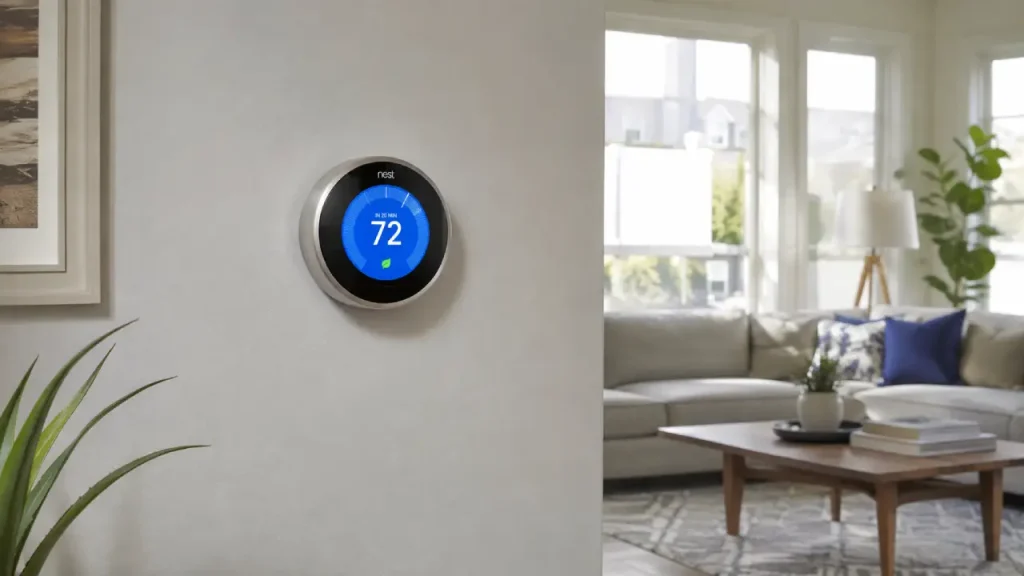
A programmable smart thermostat can make daily home temperature management much easier. Instead of manually changing the temperature several times a day, you can create schedules that match your routine. For example, you can keep the home comfortable in the morning, reduce heating or cooling while nobody is home, and return to your preferred temperature before you arrive. As a result, this simple device can improve comfort while helping you manage energy use more efficiently.
Unlike a basic thermostat, a programmable smart thermostat gives you more control over when and how your HVAC system operates. Moreover, many models allow you to adjust settings from a smartphone, create weekly schedules, and monitor your home’s temperature from almost anywhere.
What Is a Programmable Smart Thermostat?
A programmable smart thermostat is a connected thermostat that allows you to set temperature schedules for different times and days. In addition, it usually connects to Wi-Fi, allowing you to control and monitor the system through a mobile app.
For instance, you may want your home to stay at a comfortable temperature at 7:00 AM, use less energy during working hours, and become comfortable again before you return home. Instead of making these changes manually every day, you can program them in advance.
This is where the device becomes especially useful. It combines two important features:
- Programmable control: You can set a temperature schedule based on your routine.
- Smart connectivity: You can control or monitor the thermostat remotely through an app.
Therefore, the device can offer more flexibility than a traditional programmable thermostat.
How a Programmable Smart Thermostat Works
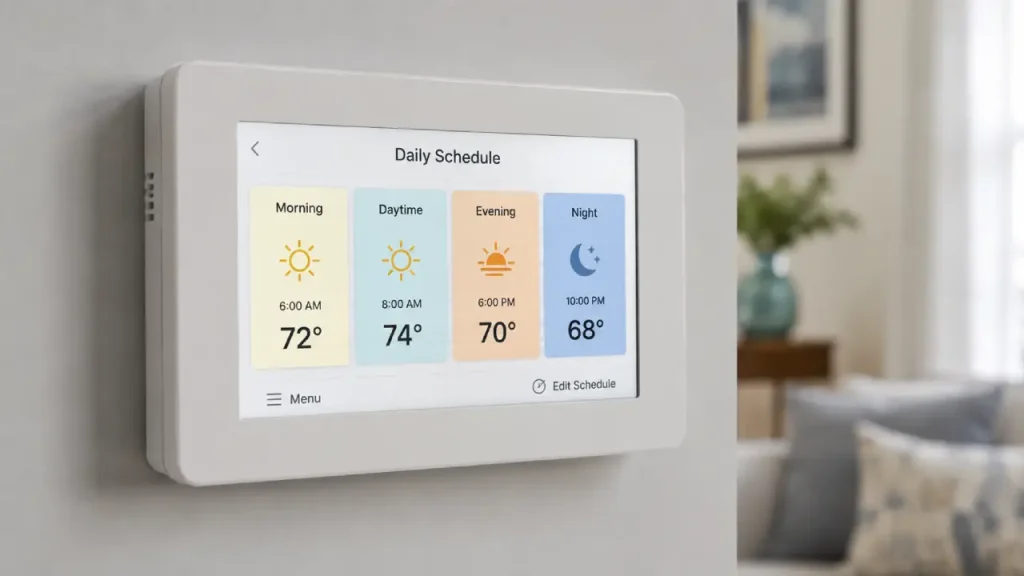
The basic idea is simple. The thermostat monitors the temperature inside your home and communicates with your heating or cooling system. Based on the schedule or settings you choose, it tells the HVAC system when to start, stop, heat, or cool.
For example, you can create a schedule like this:
- Morning: Comfortable temperature before waking up
- Daytime: Reduced heating or cooling when the home is empty
- Evening: Comfortable temperature before returning home
- Night: A different setting for sleeping
However, the schedule does not have to remain fixed forever. If your plans change, you can often adjust the temperature from your smartphone.
Additionally, some models can offer alerts, energy reports, or automated features based on your preferences. As a result, the thermostat can fit more naturally into a modern connected home.
Why Use a Programmable Smart Thermostat?
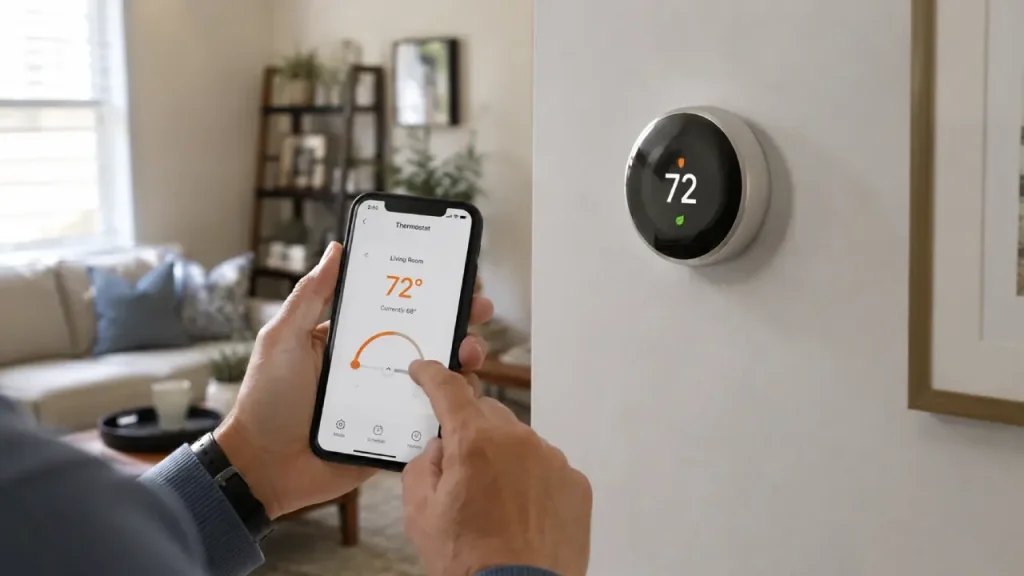
The biggest advantage is convenience. Many people follow a fairly predictable routine, yet they still forget to adjust the thermostat before leaving home. A programmed schedule can reduce that daily task.
1. Better Daily Temperature Control
A programmable smart thermostat allows you to create different settings throughout the day. Therefore, your home does not need to maintain the exact same temperature 24 hours a day.
For example, there may be no reason to cool an empty house to the same level used when everyone is home. Instead, you can schedule a more energy-conscious setting during those hours.
At the same time, you can schedule your preferred temperature before you return. This approach can balance comfort and efficiency.
2. More Convenience Through Remote Access
Smart connectivity adds another level of flexibility. If you leave home and forget to change the temperature, you may be able to adjust it through the connected app.
Similarly, unexpected schedule changes become easier to manage. Suppose you plan to return home early. Rather than waiting until you arrive, you can adjust the temperature beforehand.
This feature can be particularly useful for people with changing work schedules or frequent travel plans.
3. Potential Energy Savings
Energy savings depend on several factors, including your home, climate, insulation, HVAC system, local energy costs, and temperature habits. Nevertheless, better scheduling can help reduce unnecessary heating or cooling.
The main idea is straightforward: avoid using more heating or cooling than necessary when spaces are empty or when lower-demand settings are acceptable.
However, it is important to remember that simply buying a smart thermostat does not automatically guarantee major savings. The schedule and the way you use the system matter.
Therefore, take time to create settings that actually match your lifestyle.
4. Easier Schedule Management
Traditional programmable thermostats can sometimes feel complicated. Small buttons and confusing menus may discourage people from using scheduling features properly.
In contrast, many smart models provide app-based controls with clearer scheduling tools. You may be able to change a weekly schedule, copy settings between days, or temporarily override the current temperature.
As a result, the scheduling process can feel more practical and less technical.
Key Features to Look for in a Programmable Smart Thermostat
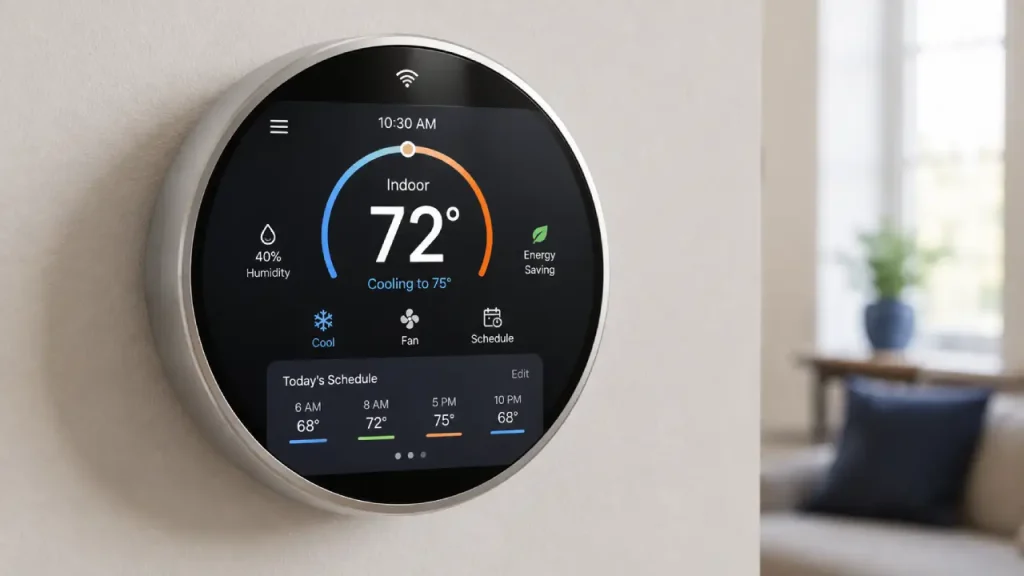
Not every thermostat offers the same experience. Therefore, understanding the most useful features can help you choose a device that matches your home.
1. Flexible Scheduling
A good programmable smart thermostat should allow flexible schedules. Ideally, you should be able to create different temperature settings for weekdays and weekends.
Some households follow the same routine every day. Others have completely different schedules during the week. Therefore, flexibility matters.
Look for scheduling options that are easy to change. A complicated schedule that you never update may not provide much value.
2. Smartphone App Control
Remote access is one of the main benefits of a smart thermostat. Through the app, you may be able to:
- Change the current temperature
- Update your schedule
- Check whether heating or cooling is active
- Receive notifications
- Monitor temperature information
However, the quality of the app can make a big difference. A thermostat may have excellent hardware but still feel frustrating if the app is difficult to use.
3. Smart Home Compatibility
If you already use smart home devices, compatibility should be part of your decision.
For example, you may want your thermostat to work alongside voice assistants, smart sensors, or other connected devices. This can create a more connected home environment.
4. Energy Monitoring and Reports
Some thermostats provide information about heating and cooling patterns. These reports can help you understand when your HVAC system works the most.
For instance, you may notice that your cooling system runs heavily during certain hours. After reviewing that information, you can experiment with your schedule.
Although reports alone will not reduce energy use, they can help you make more informed decisions.
5. Temperature Alerts
Temperature alerts can also be useful. Depending on the device, you may receive a notification when the temperature moves outside a selected range.
This feature can be helpful when you are away from home. For example, an unexpected temperature change may alert you to a possible HVAC issue.
However, the available alert features vary by model. Therefore, always check the specific capabilities before making a purchase.
How to Set Up a Programmable Smart Thermostat
Installation can be simple in some homes, but compatibility should always come first. Your existing HVAC system and wiring determine whether a particular thermostat will work properly.
Before installation, check the following:
- HVAC system compatibility
- Existing thermostat wiring
- Wi-Fi availability
- Power requirements
- Whether your system uses a common wire or another compatible power solution
If you are unsure about wiring, consider professional installation. Incorrect wiring can cause the thermostat or HVAC system to work improperly.
Once installed, the setup process usually includes connecting the thermostat to Wi-Fi, downloading the mobile app, and creating your account.
After that, you can begin creating your schedule.
How to Create an Effective Temperature Schedule
Buying the device is only the first step. To get the most value, create a schedule that reflects how your household actually lives.
Start With Your Normal Routine
First, think about when people are usually home, asleep, or away. Do not create an overly complicated schedule immediately.
Instead, begin with a few simple periods:
- Morning
- Away time
- Evening
- Night
Then, use those periods as the foundation of your schedule.
Avoid Constant Adjustments
Although remote control is convenient, changing the temperature repeatedly can make scheduling less effective.
Instead, choose reasonable settings and allow your system to maintain them. Of course, you can make temporary adjustments when necessary.
However, a stable and practical routine usually works better than constantly changing settings throughout the day.
Review and Improve the Schedule
Your first schedule may not be perfect. Therefore, give yourself time to test it.
After several days, ask yourself:
- Is the home comfortable when people are present?
- Is the system running unnecessarily when nobody is home?
- Does the schedule match weekends?
- Are there seasonal changes that require different settings?
Small improvements can make the schedule more useful over time.
Programmable Smart Thermostat vs. Standard Thermostat
A standard thermostat usually requires manual adjustments. You decide when to increase or decrease the temperature.
A programmable thermostat improves this process by allowing automatic schedules. However, a smart programmable model adds connected features and, in many cases, easier control through an app.
Here is a simple comparison:
| Feature | Standard Thermostat | Programmable Thermostat | Programmable Smart Thermostat |
|---|---|---|---|
| Manual temperature control | Yes | Yes | Yes |
| Scheduled settings | Usually no | Yes | Yes |
| Smartphone control | No | Usually no | Yes |
| Remote access | No | Usually no | Yes |
| Smart home integration | No | Limited | Often available |
| Energy reports | No | Rare | Available on some models |
Therefore, the best option depends on your needs. If you only want a basic schedule, a traditional programmable thermostat may be enough. On the other hand, if you want scheduling, remote access, and connected-home features, a smart option may offer more flexibility.
Common Mistakes to Avoid
Even a good thermostat can perform poorly when the setup or schedule does not match the home.
Creating an Unrealistic Schedule
Do not create a schedule based on what you think your routine should be. Instead, base it on your real lifestyle.
For example, if someone regularly works from home, an aggressive daytime setback may reduce comfort without delivering the expected benefits.
Ignoring HVAC Compatibility
Compatibility should never be an afterthought. Before purchasing a programmable smart thermostat, check whether it supports your heating and cooling system.
This is especially important for homes with heat pumps, multi-stage systems, or other specialized HVAC configurations.
Placing the Thermostat in the Wrong Location
The thermostat should measure a representative indoor temperature. Therefore, avoid locations that receive direct sunlight or experience unusual heat or cold.
A poor location can cause inaccurate readings and unnecessary HVAC operation.
Forgetting About Wi-Fi Reliability
Smart features depend on a stable network connection. If your Wi-Fi frequently disconnects, remote access and other connected features may not work consistently.
However, the thermostat may still retain certain local functions depending on the model.
Is a Programmable Smart Thermostat Worth It?
For many households, the answer can be yes. It is particularly useful for people who want better control over their home temperature without manually adjusting the thermostat throughout the day.
The value increases when you actually use the scheduling features. If you install the device but never create a schedule or use its smart tools, you may not receive the full benefit.
Therefore, think about your daily habits before choosing one.
A programmable smart thermostat can be a strong choice if you:
- Follow a regular or partly predictable routine
- Want remote temperature control
- Want easier schedule management
- Use other smart home devices
- Want more insight into heating and cooling patterns
- Prefer controlling your home through a mobile app
On the other hand, a basic thermostat may be enough if you prefer simple manual control and have no interest in remote access or automation.
How It Fits Into a Smart Home
A thermostat does not have to work alone. When connected with other smart home devices, it can become part of a broader automation system.
For example, smart sensors can provide additional information about conditions in different areas of the home. Likewise, smart home platforms can help bring multiple connected devices into one ecosystem.
However, automation should remain useful rather than complicated. Adding too many rules can make a smart home harder to manage.
Therefore, start with simple automations. For example, focus on temperature scheduling and remote control first. Then, add more connected features only when they provide a clear benefit.
Tips for Getting the Best Results
To make your thermostat more useful, follow these simple practices:
Keep your schedule realistic. Create settings based on your actual daily routine.
Adjust settings by season. Your summer preferences may differ from your winter needs.
Use temporary overrides when necessary. You do not need to permanently change your schedule for a one-day event.
Check your HVAC system regularly. A smart thermostat cannot solve problems caused by poor HVAC maintenance.
Review energy information carefully. Use reports as guidance, then test small changes.
Keep the app updated. Updates may improve features, stability, or security.
Most importantly, focus on comfort first and efficiency second. An extreme schedule that makes your home uncomfortable is unlikely to remain useful for long.
Final Thoughts
A programmable smart thermostat offers a practical way to manage home heating and cooling around your daily routine. Instead of remembering to change the temperature several times a day, you can create a schedule and adjust it whenever your plans change.
Moreover, smartphone access, flexible scheduling, and smart home compatibility can make temperature control easier and more convenient. At the same time, thoughtful scheduling may help reduce unnecessary energy use.
The key is to choose a compatible device and create a schedule that reflects real life. Start simple, monitor how your home feels, and make gradual adjustments when necessary.
Ultimately, a programmable smart thermostat is not just about adding another connected device to your home. When used properly, it can give you more control, better convenience, and a smarter approach to everyday comfort.