

Opening your appliance to a foul smell is a deeply frustrating experience. Fortunately, learning how to remove fridge odor does not require expensive specialty products or buying a brand-new appliance. Instead, you can solve this problem permanently with simple pantry staples and a structured cleaning plan.
Many homeowners struggle with lingering smells because they only address visible surface spills. However, odor molecules quickly soak into plastic walls, rubber seals, and hidden drain components. In this guide, you will learn why smells persist and the exact steps needed to eliminate them for good.
Why Fridge Odors Persist (It’s Not What You Think)
When food decays inside a cold space, it releases volatile organic compounds. Consequently, these smell molecules penetrate the porous plastic walls and soft rubber seals surrounding the appliance door. Therefore, simply throwing away spoiled food is rarely enough to eliminate the smell.
In addition, several hidden spots continuously trap residue and release bad smells into your kitchen:
-
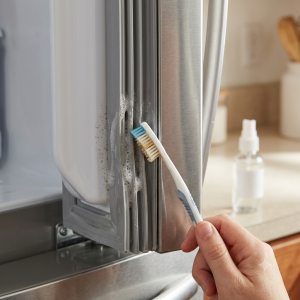
The Door Gasket: The flexible accordion folds on your rubber seal hold moisture, food crumbs, and mold spores.
-
The Defrost Drip Tray: Located underneath or behind the unit, this pan collects defrost runoff. Over time, spilled milk or organic matter washes do
-
wn into this warm pan, creating an ongoing odor source.
-
Expired Absorbers: A box of baking soda that sits open for over three months reaches maximum absorption capacity. As a result, it stops working entirely.

How to Remove Fridge Odor in 4 Steps
To tackle this issue successfully, you must clean every interior surface and target hidden areas at the same time.

Step 1: Empty the Entire Unit
First, remove all food containers, produce bags, condiments, and deli boxes. Check the bottoms of jars for sticky residue before setting them on your counter. Throw away anything expired, moldy, or unsealed. Next, remove all detachable glass shelves, crisper drawers, and door bins.
Step 2: Deep Clean Hidden Hotspots
Mix equal parts warm water and white vinegar in a spray bottle. White vinegar is a food-safe disinfectant that chemically neutralizes alkaline smell compounds rather than just masking them.
-
Scrub the Gaskets: Dip an old toothbrush into your vinegar solution and gently scrub inside every fold of the door seal.
-
Clean Shelf Tracks: Wipe down the plastic ledges and side brackets where shelves slide in.
-
Wash the Drip Tray: Pull out the lower drip pan and wash it thoroughly with hot, soapy water. According to the USDA Food Safety Guidelines, keeping food storage areas clean and sanitized is critical for preventing foodborne illness.
Step 3: Neutralize Lingering Interior Odors
Once surfaces are wiped clean, treat the smells absorbed into the plastic walls. Wipe down all interior walls with straight white vinegar and allow it to air dry. Although vinegar has a strong initial scent, it dissipates quickly as it dries and carries absorbed odors away with it.
Step 4: Place Fresh Absorbers
Finally, place a fresh, open container of baking soda or an activated charcoal bag inside the appliance. Activated charcoal features millions of microscopic pores that effectively trap organic odor molecules. If you want to learn more about kitchen organization, check out our internal guide on how to organize fresh produce efficiently.
Solutions for Specific Odor Problems in the Fridge
- Smelly Ice Cubes
If your ice tastes or smells bad, the ice bin has likely absorbed ambient food smells. Discard all old ice, wash the storage bin with warm baking soda water, and replace your water filter. For complete instructions, read our full article on how to clean an automatic ice maker.
- Chemical or Burning Smells
A distinct chemical, burning, or electrical odor indicates an equipment malfunction rather than spoiled food. In this scenario, turn off the unit immediately. Consult professional advice from the EPA Energy Star Appliance Safety Portal or contact a certified technician.
Long-Term Prevention Tips
-
Date Your Absorbers: Write the current date on your baking soda box and replace it every 90 days.
-
Wipe Spills Instantly: Cleaning small drips immediately takes thirty seconds and prevents future deep-cleaning sessions.
-
Check Your Temperature: Maintain an interior temperature between 37°F and 40°F. If the temperature drops too low, delicate produce freezes, breaks down, and rots rapidly upon thawing.
By following these targeted steps, you can successfully remove fridge odor and keep your kitchen clean, safe, and fresh.