
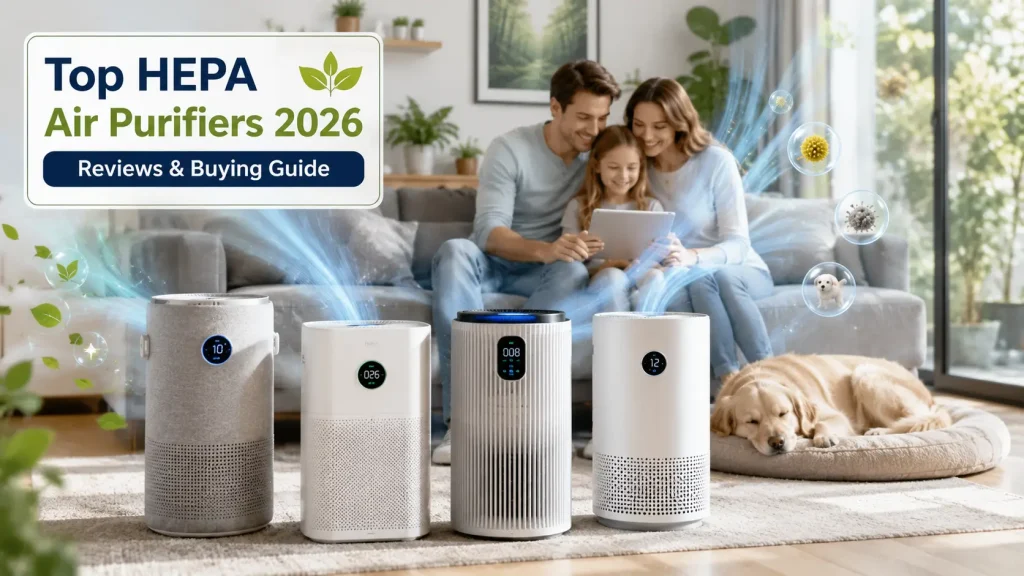
Indoor air quality is easy to overlook. After all, you cannot always see the dust, pollen, pet dander, and tiny airborne particles floating around your home. However, these pollutants can build up indoors, especially when windows remain closed or ventilation is limited. That is where the Top HEPA Air Purifiers can make a meaningful difference.
A good air purifier does more than sit quietly in the corner of your bedroom or living room. It continuously pulls air through its filtration system, captures airborne particles, and sends cleaner air back into the room. As a result, the right model can help create a fresher and more comfortable indoor environment.
However, choosing an air purifier is not as simple as picking the most expensive model. Room size, filtration technology, CADR, noise, energy consumption, filter replacement costs, and smart features all matter. Therefore, it is important to consider how you actually plan to use the purifier before spending your money.
In this guide, we will look at some of the best HEPA air purifiers worth considering in 2026. We will also explain what to look for, which features matter most, and how to choose the right model for your home.
Why HEPA Filtration Matters
HEPA stands for High Efficiency Particulate Air. In general, HEPA filtration is designed to capture a very high percentage of small airborne particles under standardized testing conditions.
That is important because indoor air can contain many different types of particles. For example, dust, pollen, pet dander, and some smoke particles can circulate through your home without being immediately visible.
Fortunately, a quality air purifier with an effective particle filter can continuously clean the air as it operates. However, performance depends on more than just the filter itself. Airflow and room size are equally important.
For example, imagine buying a small purifier for a very large open-plan living room. Even if the filter itself performs well, the unit may not move enough air through the space to provide the results you expect.
Therefore, always consider the purifier and the room as a pair.
You can also learn more about indoor air-cleaning technology from the U.S. Environmental Protection Agency’s guide to air cleaners and air filters.
What to Look for in an HEPA Air Purifiers
Before choosing from the Top HEPA Air Purifiers, it helps to understand the specifications that actually matter.
Room Size and CADR
First, check the recommended room coverage. Manufacturers usually provide a suggested room size, although testing methods can vary between brands.
CADR, or Clean Air Delivery Rate, is another useful measurement. It provides an indication of how quickly a purifier can deliver filtered air. Generally, a higher CADR is beneficial when cleaning larger spaces.
Consequently, do not automatically choose the smallest or cheapest purifier available. A properly sized unit is more likely to deliver the performance you need.
Genuine HEPA Filtration
Next, pay attention to the filtration system. Some products use terms such as “HEPA-type” or “HEPA-like,” which do not necessarily mean the same thing as a certified HEPA filter.
If particle filtration is your primary concern, carefully review the manufacturer’s specifications. In addition, look at the complete filtration system rather than focusing on a single marketing term.
Activated Carbon
HEPA filters are excellent for airborne particles, but they are not designed to remove every type of gas or odor.
For that reason, activated carbon can be a useful addition. Carbon filtration may help reduce certain household odors and some gaseous pollutants.
If you cook frequently, have pets, or are particularly sensitive to odors, a purifier with a substantial carbon filter may be worth considering.
Noise Level
An air purifier cannot help much if you constantly turn it off because it is too loud.
Therefore, noise is an important consideration, especially for bedrooms and home offices. Look for models with sleep modes or quiet fan settings.
Keep in mind, however, that a purifier may clean air more quickly at higher fan speeds. As a result, you should consider both noise and performance rather than choosing solely based on the quietest specification.
Filter Replacement Costs
Finally, consider long-term ownership costs.
The initial purchase price is only one part of the equation. Replacement filters can become a significant expense over several years.
Before buying, check:
- The cost of replacement filters
- How frequently filters need to be changed
- Whether replacement filters are easy to find
- Energy consumption
- Warranty coverage
In other words, a slightly more expensive purifier may sometimes offer better overall value if its maintenance costs are reasonable.
7 Best HEPA Air Purifiers to Consider in 2026
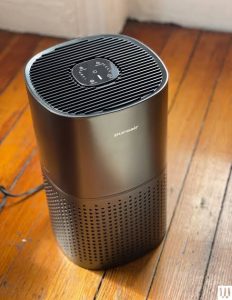
1. Rabbit Air A3 — Best Overall Premium Choice
The Rabbit Air A3 is an attractive option for people who want a premium air purifier with advanced filtration and quiet operation.
One of its biggest strengths is its multi-stage filtration system. Depending on the configuration, it can address common household concerns such as dust, pollen, pet allergens, and odors.
Moreover, its quiet operation makes it suitable for bedrooms, offices, and other spaces where noise can become distracting.
The A3 also has a premium design that can blend more easily into a modern home than some bulky air purifiers.
Best for: Allergy sufferers, pet owners, bedrooms, and users who want a premium experience.
Potential downside: The initial price can be higher than many mainstream models. Therefore, it may not be the best option for shoppers who simply want basic air cleaning on a tight budget.
2. Coway Airmega 400S — Best for Large Rooms
If you have a large living room or spacious open area, the Coway Airmega 400S deserves consideration.
Its larger design and strong airflow make it suitable for bigger spaces than many compact bedroom purifiers. Additionally, smart features can make it easier to monitor and control the unit.
The Airmega 400S is particularly appealing for households that want a combination of strong air cleaning and convenient controls.
Furthermore, its design is relatively straightforward. You do not need to spend hours learning how to operate it.
Best for: Large rooms, open living spaces, families, and people who want smart features.
Potential downside: It takes up more floor space than compact models and may be excessive for a small bedroom.
3. Blueair Blue Pure 311i Max — Best Value
The Blueair Blue Pure 311i Max is a strong choice for shoppers who want a good balance between performance and price.
It is compact enough for many everyday spaces while offering effective air cleaning for appropriately sized rooms. Therefore, it can be a practical option for bedrooms, apartments, and home offices.
Additionally, its simple design makes it easy to incorporate into a modern living space.
For people dealing with everyday household pollutants such as dust, pollen, and pet dander, this model is worth considering.
Best for: Value-conscious shoppers, apartments, bedrooms, and small-to-medium rooms.
Potential downside: Always check the recommended room coverage before buying. A compact purifier may not be powerful enough for a very large open space.
4. Dyson Big+Quiet — Best Premium Features
Dyson is well known for combining technology with distinctive product design, and its Big+Quiet range is aimed at users who want premium features.
The purifier focuses on powerful air circulation while also offering air-quality monitoring features. As a result, it may appeal to people who enjoy tracking their indoor environment.
The connected features can also make it easier to understand changes in air quality when cooking, cleaning, or opening windows.
However, the main attraction is not just filtration. Instead, Dyson is targeting consumers who want a complete premium experience.
Best for: Large rooms, technology enthusiasts, smart-home users, and premium buyers.
Potential downside: The price can be significantly higher than simpler air purifiers. If you only care about particle removal, you may find better value elsewhere.
5. Shark NeverChange5 — Best for Low Maintenance
For many people, replacing air purifier filters is an annoying chore. The Shark NeverChange5 is designed to address that concern with a long-lasting filter system.
The appeal is simple: fewer filter replacements can mean less maintenance and potentially lower hassle over time.
That makes it an interesting choice for busy families and households with pets.
Nevertheless, “long-lasting” does not mean “maintenance-free.” You should still follow the manufacturer’s recommendations and check the filter regularly.
Best for: Busy households, pet owners, and people who want less frequent filter replacement.
Potential downside: The initial purchase price may be higher than basic models, so consider the long-term cost rather than just the upfront price.
6. Levoit Vital 200S — Best for Everyday Home Use
The Levoit Vital 200S is designed for practical everyday air cleaning.
It is particularly interesting for households with pets because it focuses on common indoor pollutants and airborne particles associated with everyday living.
Moreover, its smart features can make operation more convenient. You can use automatic settings and monitoring features depending on your needs.
For shoppers who want a practical purifier without moving into the highest premium price category, it can be an appealing option.
Best for: Everyday use, pet owners, bedrooms, and families.
Potential downside: As with every purifier, performance depends heavily on choosing the right size for your room.
7. Coway Airmega Mighty — Best Compact Choice
The Coway Airmega Mighty is a popular compact air purifier that fits comfortably into smaller spaces.
Because of its relatively small footprint, it can work well in bedrooms, offices, and other areas where floor space is limited.
Additionally, it has a reputation for providing a good combination of performance and practicality.
If you live in an apartment or want a purifier specifically for your bedroom, a compact model like this can make more sense than buying a large unit designed for a whole living area.
Best for: Small rooms, bedrooms, home offices, and apartments.
Potential downside: Its smaller size means it is not the ideal choice for large open-plan spaces.
How to Choose the Right HEPA Air Purifier for Your Home
Choosing among the Top HEPA Air Purifiers becomes much easier when you focus on your personal needs.
For Allergies
If allergies are your main concern, prioritize strong particle filtration and appropriate room coverage.
Pollen, dust, and pet dander are common indoor particles that can circulate through the air. Therefore, a purifier with effective particle filtration can be a useful addition to an overall allergy-management strategy.
However, remember that an air purifier is not a replacement for cleaning, ventilation, or medical treatment when needed.
For Pet Owners
Pets bring plenty of joy into a home, but they can also contribute to airborne dander, dust, and odors.
For this reason, pet owners should consider a purifier with effective particle filtration. An activated carbon filter can also be useful when odors are a concern.
Additionally, regular vacuuming and cleaning should work alongside air purification.
If you are interested in improving your overall home-cleaning routine, check out our guide to Best Vacuum Cleaners.
For Wildfire Smoke
Wildfire smoke requires special attention because it can contain very small particles as well as gaseous pollutants.
Consequently, look for strong particle filtration combined with an effective activated carbon component. Also, make sure the purifier is appropriately sized for the room.
During periods of poor outdoor air quality, keeping windows and doors closed can also reduce the amount of outdoor pollution entering your home.
For Bedrooms
A bedroom purifier should ideally be quiet enough to run while you sleep.
Therefore, consider models with sleep modes and low fan speeds. However, do not assume that the quietest setting provides maximum cleaning power.
If possible, run the purifier at a higher speed before bedtime and then switch to a quieter setting while sleeping.
For Large Living Rooms
Large spaces require more airflow.
Therefore, look for a purifier with strong CADR performance and a room coverage rating that matches or exceeds your actual room size.
If you have an open-plan home, remember that the total space may be larger than the room size listed on the product box.
How to Use an Air Purifier More Effectively
Buying a good purifier is only half the job. How you use it also matters.
First, place the purifier where air can move freely. Avoid pushing it tightly against a wall or hiding it behind furniture.
Next, run it consistently. An air purifier usually works best when it is allowed to clean the air regularly rather than being switched on only when you notice dust.
Also, keep doors and windows closed when outdoor pollution levels are high. Otherwise, new pollutants can continuously enter the room.
However, ventilation remains important when outdoor air quality is good. Therefore, balance air purification with appropriate ventilation for your home.
Finally, replace or clean filters according to the manufacturer’s recommendations. A heavily loaded filter can restrict airflow and reduce performance.
For more information about energy-efficient room air cleaners, you can also explore the ENERGY STAR guide to room air cleaners.
Common Mistakes to Avoid
Even the best purifier may disappoint if you make the wrong choice.
Buying the Wrong Size
A purifier designed for a small bedroom cannot necessarily handle a large living room effectively.
Therefore, always compare room size and airflow before buying.
Focusing Only on Price
A low purchase price can be attractive. However, replacement filters and electricity costs can add up over time.
Instead, consider the total cost of ownership.
Ignoring Noise
If a purifier is too loud, you may stop using it regularly.
Consequently, check noise ratings and user reviews before making a decision.
Expecting One Purifier to Clean an Entire Home
Air purification is generally most effective when the purifier is appropriately sized for the room where it operates.
If you have a large home with multiple closed-off rooms, one small unit may not be enough.
Forgetting About Maintenance
Even low-maintenance models need some attention.
Check filters, clean washable components when instructed, and replace disposable filters according to the manufacturer’s guidelines.
Final Verdict
The best air purifier for your home depends on more than brand popularity. Your room size, budget, air-quality concerns, noise tolerance, and maintenance preferences should all influence your decision.
The Rabbit Air A3 stands out as a premium option for users who prioritize quiet operation and advanced filtration. Meanwhile, the Coway Airmega 400S is a strong candidate for larger spaces.
For shoppers looking for balanced value, the Blueair Blue Pure 311i Max is worth considering. On the other hand, the Dyson Big+Quiet is aimed at people who want premium technology and smart features.
If low maintenance is your priority, the Shark NeverChange5 offers a convenient approach. Meanwhile, the Levoit Vital 200S and Coway Airmega Mighty are practical choices for everyday home use and smaller spaces.
Ultimately, the Top HEPA Air Purifiers are not necessarily the most expensive models on the market. Instead, the right choice is the purifier that fits your room, addresses your specific air-quality concerns, and remains affordable to operate over the long term.
Before you buy, compare CADR, room coverage, filtration, noise, filter costs, and energy use. Most importantly, choose a model you will actually run consistently.
After all, a good air purifier is an investment in a cleaner and more comfortable indoor environment. When you choose wisely and use it correctly, you can make your home’s air feel fresher every day.
Frequently Asked Questions
Are HEPA air purifiers worth it?
For many households, a quality HEPA air purifier can be a useful tool for reducing airborne particles such as dust, pollen, and pet dander. However, results depend on choosing the right size and using the purifier consistently.
How long should I run my air purifier?
Many people run air purifiers continuously at a lower setting or use automatic modes. The ideal schedule depends on the model, room conditions, and your personal needs.
Should I buy an air purifier with activated carbon?
If odors or certain gaseous pollutants are a concern, activated carbon can be a useful addition to particle filtration. However, the amount of carbon used can vary considerably between models.
Is a bigger air purifier always better?
Not necessarily. A larger purifier may offer more airflow, but it can also cost more and take up additional space. The best choice is one that is appropriately sized for your room.
Where should I place my air purifier?
Place it in an area with good airflow and keep the intake and outlet unobstructed. Avoid hiding it behind furniture or pushing it tightly into a corner.
Do HEPA air purifiers remove odors?
HEPA filters primarily target airborne particles. For odors, look for a purifier that also includes an activated carbon filter. The effectiveness will depend on the amount and quality of carbon used.