
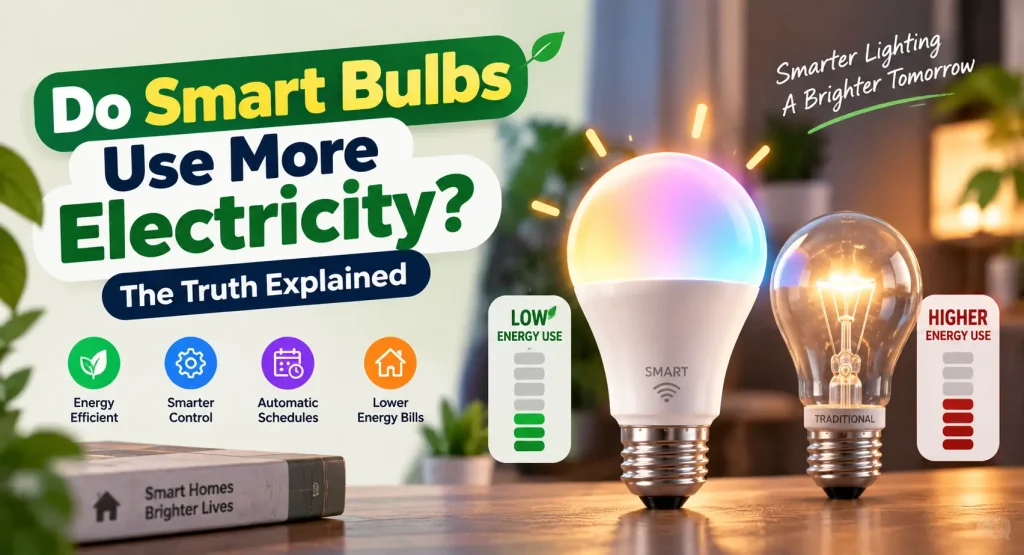
Smart lighting has become a popular upgrade for homes because it offers convenient features such as remote control, automation, scheduling, and voice commands. As more people switch from traditional lighting to connected devices, many begin to ask do smart bulbs use more electricity than ordinary LED bulbs and whether these additional features increase household energy costs.
The simple answer is no. Most smart bulbs use LED technology, making them just as energy efficient as many standard LED bulbs. While they contain built-in electronics that stay connected to your home network, the additional electricity required to power these components is extremely small.
In fact, many homeowners find that smart lighting helps reduce unnecessary energy use. Features such as automatic schedules, timers, remote access, and lighting routines make it easier to avoid leaving lights on when they are not needed.
This guide explains how much electricity smart bulbs actually use, why they consume a small amount of standby power, how they compare with traditional LED bulbs, and whether smart lighting can help lower your electricity usage over time.
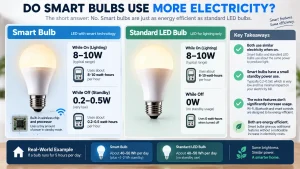
Table of Contents
- Do Smart Bulbs Use More Electricity?
- Do Smart Bulbs Use More Electricity Than LED Bulbs?
- Why Smart Bulbs Use Standby Power
- Do Smart Bulbs Use Electricity When Turned Off?
- Can Smart Bulbs Help Reduce Electricity Usage?
- What Affects Smart Bulb Energy Consumption?
- Frequently Asked Questions
- Final Thoughts
Do Smart Bulbs Use More Electricity?
For most households, the answer is no.
Smart bulbs are designed using energy-efficient LED technology, which means they consume a similar amount of electricity to standard LED bulbs that produce the same level of brightness. Their smart features do require additional electronic components, but these components use very little power compared with the electricity needed to produce light.
When a smart bulb is switched on, most of its electricity is used by the LED itself. The built-in wireless chip and processor require only a small amount of additional energy to manage communication with your smartphone, voice assistant, or smart home platform.
Because of this, the overall difference in electricity consumption between a smart LED bulb and a regular LED bulb is usually very small.
For most people, the convenience offered by smart lighting easily outweighs this minor difference in power usage.
Do Smart Bulbs Use More Electricity Than LED Bulbs?
This is one of the most common questions people ask before upgrading their home lighting.
At first glance, smart bulbs and ordinary LED bulbs look almost identical. Both use LED technology, fit into standard light sockets, and provide efficient lighting. The biggest difference is that smart bulbs include built-in electronics that allow them to communicate with other devices.
When both bulbs produce the same brightness, their electricity consumption while the light is switched on is usually very similar.
For example, many modern smart bulbs use between 7 and 12 watts, which is comparable to many standard LED bulbs with the same light output.
Unlike a regular LED bulb, however, a smart bulb continues to receive electrical power after the light has been turned off. This allows it to remain connected to your smart home so it can respond immediately when you use a mobile app, voice assistant, or automation routine.
Although this standby connection uses a small amount of electricity, it is typically measured in fractions of a watt and has very little impact on overall household energy consumption.
Compared with older incandescent or halogen bulbs, both smart bulbs and standard LED bulbs remain far more energy efficient.
Why Smart Bulbs Use Standby Power
One feature that often causes confusion is standby power.
Unlike a conventional light bulb, a smart bulb is more than just a light source. Inside the bulb are several electronic components that allow it to stay connected and communicate with your smart home.
These components include:
- A wireless communication chip
- A microprocessor
- Internal memory
- Firmware
Together, these components allow the bulb to perform many smart functions.
For example, standby power allows a smart bulb to:
- Receive commands from your smartphone
- Respond to voice assistants
- Follow daily schedules
- Run automation routines
- Connect with smart home platforms
- Receive firmware updates
Without standby power, these features would stop working whenever the light was switched off. Instead, the bulb remains ready to respond as long as electrical power is available.
The amount of electricity used during standby mode is extremely small and is generally insignificant when compared with the electricity consumed while the light is operating.
Most homeowners are unlikely to notice any meaningful increase in their monthly electricity bill simply because their smart bulbs remain connected.
Do Smart Bulbs Use Electricity When Turned Off?
Another question homeowners often ask is whether a smart bulb continues to use electricity after it has been turned off.
The answer depends on how the bulb is turned off.
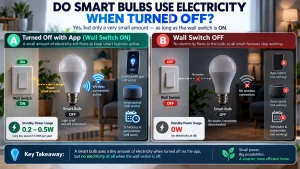
If you switch the light off using a mobile app, voice assistant, or automation, the bulb still receives electrical power from the socket. Although the light is no longer producing illumination, the bulb remains connected to your smart home and continues using a very small amount of standby electricity.
This standby power keeps the wireless connection active so the bulb can instantly respond when you want to turn it back on.
However, if you switch off the wall switch that supplies power to the bulb, it becomes completely disconnected from electricity. In this situation, the smart bulb no longer consumes power because it is no longer receiving electricity. The downside is that it also loses its smart functionality until power is restored.
This is why many smart home users leave the wall switch on and control their lights using an app, voice assistant, or automation instead.
Can Smart Bulbs Help Reduce Electricity Usage?
Although smart bulbs use a small amount of standby electricity, many households actually reduce their overall energy consumption after installing them.
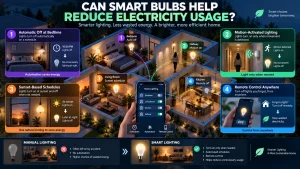
The biggest advantage comes from having better control over when lights are used. Instead of relying on someone remembering to switch lights off, smart lighting can automatically manage your home’s lighting throughout the day.
For example, you can create schedules that turn lights off every night before bedtime or switch them on shortly before you arrive home. This helps avoid unnecessary electricity use without requiring manual operation.
Smart bulbs also make it easier to control lighting when you are away from home. If you accidentally leave a light on, you can simply open the manufacturer’s mobile app and switch it off remotely.
Many smart home systems also support automation. Lights can respond automatically to motion sensors, door sensors, or sunrise and sunset times, ensuring they only operate when needed.
These features can help reduce wasted electricity far more than the tiny amount of standby power required to keep the bulb connected.
What Affects Smart Bulb Energy Consumption?
Not every smart bulb uses exactly the same amount of electricity. Several factors influence how much energy a bulb consumes during everyday use.
Brightness Settings
Brighter light output requires more electricity than lower brightness levels. If a smart bulb is frequently used at maximum brightness, it will naturally consume more energy than when it is dimmed.
Daily Usage
Like any light source, the longer a bulb remains switched on, the more electricity it uses. Smart bulbs are no different in this respect.
Colour-Changing Features
Many smart bulbs allow users to select different colours or adjust the colour temperature. Depending on the design of the bulb, certain colour combinations may use slightly different amounts of power, although the difference is generally small.
Wireless Connection
Smart bulbs may connect using Wi-Fi, Bluetooth, Zigbee, Thread, or Matter. Each communication method has slightly different power requirements, but the overall difference is minimal for most households.
Automation and Scheduling
One of the biggest advantages of smart lighting is automation. By creating schedules and routines, you can reduce the amount of time lights stay on unnecessarily, helping lower overall electricity consumption.
Do Smart Bulbs Cost More to Run?
When people compare lighting options, they often focus only on electricity usage. However, running costs also depend on how efficiently the lighting is used.
A smart bulb may consume a tiny amount of standby electricity, but its advanced features often help prevent wasted energy throughout the home.
For example, imagine someone regularly leaves the kitchen light on for several hours after leaving the house. A smart bulb with automatic schedules or remote control can prevent this from happening. Over weeks and months, the electricity saved by avoiding unnecessary lighting can easily outweigh the small amount of standby power used by the bulb.
In many homes, the convenience of automation leads to better lighting habits, making smart bulbs an efficient long-term choice.
Another factor to consider is lifespan. Most smart bulbs are based on LED technology, which is designed to last much longer than traditional incandescent bulbs. Because they need replacing less often, they may also help reduce maintenance costs over time.
For homeowners looking to improve both convenience and energy efficiency, smart bulbs offer a practical solution without significantly increasing electricity consumption.