
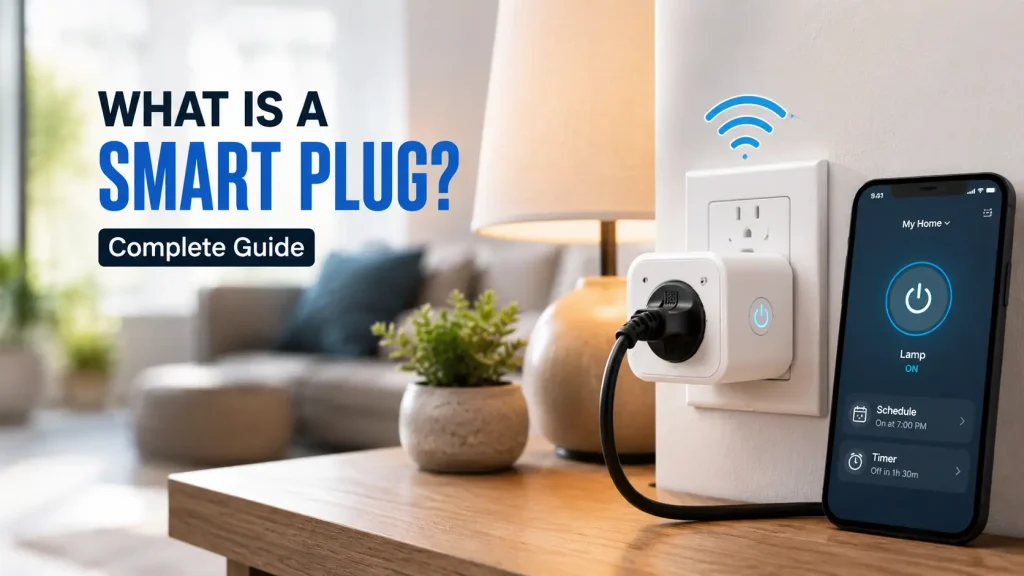
If you’re new to smart home technology, you may be wondering what is a smart plug and whether it’s worth buying. A smart plug is a small device that fits into a standard electrical outlet and lets you control compatible appliances using a smartphone, tablet, or voice assistant. Instead of replacing your existing devices, you simply connect them to the smart plug to add convenient smart features.
From switching lights on before you arrive home to creating automatic schedules for everyday appliances, smart plugs make home automation simple and affordable. They require very little setup and can work with many common household devices, making them an excellent starting point for anyone building a connected home.
In this guide, you’ll discover how smart plugs operate, their key advantages, where they can be used, important safety tips, and what to consider before choosing one. You’ll also find links to detailed setup and troubleshooting guides for popular smart plug brands.
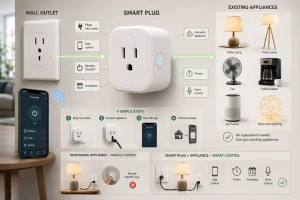
Table of Contents
- Understanding Smart Plugs
- How Smart Plugs Work
- Benefits of Using a Smart Plug
- Everyday Uses
- Are Smart Plugs Safe?
- Things to Consider Before Buying
- Related Smart Plug Guides
- Frequently Asked Questions
- Final Thoughts
What Is a Smart Plug?
A smart plug is a compact adapter that connects between a wall outlet and an electrical appliance. Once connected to your home network, it allows the appliance to be switched on or off remotely using a mobile app or a compatible smart home platform.
Unlike traditional plug timers that only operate on fixed schedules, smart plugs provide much greater flexibility. They can respond to manual commands, automated routines, countdown timers, or voice requests, depending on the features supported by the model you choose.
Because installation usually requires no electrical work or professional assistance, smart plugs have become one of the easiest ways to introduce automation into a home. Most users simply plug in the device, connect it to the manufacturer’s app, and follow a short setup process that typically takes only a few minutes.
Many models also integrate with popular smart home ecosystems, allowing them to work alongside other connected devices such as smart bulbs, security cameras, motion sensors, and smart speakers.
How Does a Smart Plug Work?
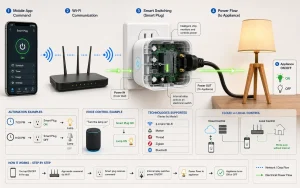
A smart plug acts as an intelligent power switch. When an appliance is connected, the plug controls whether electricity flows to that device. Instead of using the appliance’s physical switch every time, you can control the power through an app or compatible voice assistant.
Most smart plugs connect through a 2.4 GHz Wi-Fi network, although some newer models support technologies such as Matter, Thread, Zigbee, or Bluetooth. After pairing the plug with your network, commands are sent from your phone or smart home platform to turn the connected appliance on or off.
Many smart plugs also allow automation. For example, you can create routines that switch lights on before sunset, power off devices at bedtime, or activate selected appliances at the same time every morning. These routines continue operating automatically until you decide to change them.
Some models include cloud connectivity for remote access while others support local communication for faster control within your home. The available features depend on the manufacturer and the smart home ecosystem you use.
Benefits of Using a Smart Plug
Convenient Remote Control
One of the biggest advantages of a smart plug is being able to control connected appliances from almost anywhere. Whether you’re relaxing in another room, travelling, or still at work, you can check the status of compatible devices and switch them on or off through the companion app.
This feature is useful when you’ve forgotten to turn something off before leaving home or when you want certain appliances ready before you arrive.
Automatic Scheduling
Schedules allow appliances to operate without daily manual input. Instead of remembering to switch lights, fans, or coffee makers on and off, you can choose the exact times you want them to operate.
Daily schedules are especially helpful for maintaining consistent routines while reducing unnecessary power usage.
Countdown Timers
Many smart plugs include built-in countdown timers that automatically disconnect power after a selected period. This function works well for appliances that only need to operate temporarily, helping reduce the chance of accidentally leaving them running longer than intended.
Voice Assistant Support
Many smart plugs work with Amazon Alexa, Google Assistant, and selected Apple HomeKit devices. After linking the plug to your preferred platform, you can control compatible appliances using simple voice commands instead of opening the mobile app.
Voice control also makes it easier to operate multiple connected devices as part of larger home automation routines.
Energy Monitoring
Some smart plugs include energy monitoring that records how much electricity connected appliances consume. The companion app displays usage history, allowing you to better understand your household’s electricity consumption and identify devices that use more power than expected.
This information can help you make more informed decisions about how and when appliances are used.
Common Uses of a Smart Plug
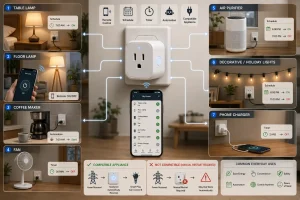
One of the main reasons smart plugs have become popular is their ability to automate many everyday appliances without replacing existing equipment. As long as the connected device automatically resumes operation when power is restored, it can usually be controlled through a compatible smart plug.
Some common examples include:
- Table lamps
- Floor lamps
- Coffee makers
- Fans
- Air purifiers
- Humidifiers
- Phone chargers
- Decorative lighting
- Holiday lights
- Small kitchen appliances
Smart plugs are also useful for creating routines that fit your daily schedule. For example, a bedside lamp can switch on before you wake up, decorative lights can turn off automatically late at night, or an air purifier can run only during certain hours.
Before connecting any appliance, always confirm that its electrical requirements fall within the smart plug’s supported limits. Devices that require manual operation after a power interruption may not function as expected.
Are Smart Plugs Safe?
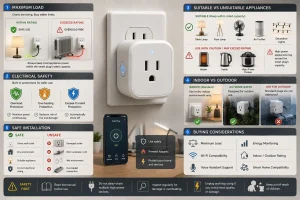
When used correctly, smart plugs are generally considered safe for everyday household use. Products from reputable manufacturers are typically designed with safety features that help protect both the connected appliance and your home’s electrical system.
Many models include protection against overheating, electrical overload, and excessive current. Some are also manufactured using flame-resistant materials that improve overall safety during normal operation.
Safe use also depends on following the manufacturer’s instructions. Before connecting an appliance, check the smart plug’s maximum supported load and compare it with the appliance’s power requirements. Exceeding the rated capacity may damage the plug or create a safety risk.
For the best results, follow these basic recommendations:
- Buy products from trusted manufacturers with recognised safety certifications.
- Never exceed the maximum wattage or current rating.
- Plug the device directly into a wall outlet unless the manufacturer advises otherwise.
- Avoid using damaged electrical outlets or worn extension cords.
- Keep indoor models away from moisture and wet environments.
- Inspect the plug regularly for signs of damage or overheating.
Using a smart plug within its specified limits helps ensure reliable operation while reducing unnecessary electrical risks.
Things to Consider Before Buying
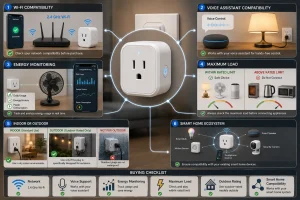
Although most smart plugs perform the same basic task, the available features can vary considerably. Choosing the right model depends on your home network, the appliances you plan to control, and your preferred smart home ecosystem.
Wi-Fi Compatibility
Most smart plugs connect to a 2.4 GHz Wi-Fi network, while some newer models also support additional wireless technologies. Before purchasing, confirm that the plug is compatible with your home network to avoid setup problems.
Voice Assistant Compatibility
If you already use Amazon Alexa, Google Assistant, or Apple HomeKit, check whether the smart plug supports your preferred platform. Compatible devices can be added to existing smart home routines and controlled using voice commands.
Energy Monitoring
Not every smart plug includes electricity monitoring. If tracking energy consumption is important to you, choose a model that clearly lists this feature in its specifications.
Maximum Load Rating
Every smart plug has a maximum electrical capacity. Before connecting appliances such as coffee machines, heaters, or kettles, verify that their power requirements remain within the manufacturer’s recommended limits.
Indoor or Outdoor Use
Most smart plugs are designed only for indoor environments. If you need to control garden lighting, outdoor decorations, or patio equipment, select a weather-resistant model specifically designed for outdoor installation.
Smart Home Ecosystem
Some smart plugs support newer standards such as Matter, allowing them to work across multiple smart home platforms. Choosing a model with broad compatibility can make future expansion easier if you plan to add more smart devices later.
Related Smart Plug Guides
To help you get the most from your device, we’ve created detailed guides covering installation, troubleshooting, and device-specific instructions.
- How Do Smart Plugs Work – Learn how smart plugs communicate with your home network and control connected appliances.
- How to Reset Smart Plug – Step-by-step instructions for resetting most smart plug models.
- How to Reset Meross Smart Plug – Factory reset instructions for Meross smart plugs.
- How to Reset TP-Link Smart Plug – Learn how to restart or factory reset TP-Link Kasa smart plugs safely.
Frequently Asked Questions
What Can You Use a Smart Plug For?
A smart plug allows you to control compatible electrical appliances remotely through a mobile app or supported voice assistant. It can also automate everyday devices using schedules, timers, and smart home routines.
Do Smart Plugs Need Wi-Fi?
Most smart plugs require a Wi-Fi connection during the initial setup and for remote control. However, some models can continue running saved schedules even if your internet connection is temporarily unavailable. Devices that support Matter, Thread, or Zigbee may also work through compatible smart home hubs.
Can a Smart Plug Reduce Electricity Usage?
A smart plug does not directly lower the amount of electricity an appliance uses. Instead, it helps reduce unnecessary power consumption by automatically turning compatible devices off when they are no longer needed or by preventing them from running longer than necessary.
Do Smart Plugs Work with Voice Assistants?
Yes. Many smart plugs are compatible with popular voice assistants, including Amazon Alexa, Google Assistant, and, on selected models, Apple HomeKit. Once connected, you can control appliances using simple voice commands or include them in automated routines.
Can I Control My Smart Plug Away from Home?
Yes. Most Wi-Fi-enabled smart plugs support remote access through their companion mobile apps. As long as both your smartphone and the smart plug are connected to the internet, you can check the device status and control connected appliances from almost anywhere.
Are Smart Plugs Safe for Everyday Use?
When used according to the manufacturer’s instructions, smart plugs are generally safe for everyday household use. Always choose products that meet recognised safety standards and avoid connecting appliances that exceed the plug’s maximum electrical rating.
Can Smart Plugs Be Used Outdoors?
Only smart plugs specifically designed for outdoor use should be installed outside. Indoor models are not built to withstand rain, humidity, or changing weather conditions and should always be used in dry indoor locations.
What Appliances Should Not Be Connected?
Avoid connecting appliances that exceed the smart plug’s rated capacity or devices that require manual operation after power is restored. Always review the manufacturer’s recommendations before connecting high-powered equipment.
Can One Smart Plug Control More Than One Device?
Yes, but only if multiple low-power devices are connected through a suitable power strip and the combined electrical load remains within the smart plug’s supported limit. Always follow the safety guidance provided by the manufacturer.
Final Thoughts
A smart plug is one of the easiest and most practical ways to introduce smart technology into your home. Without replacing your existing appliances, it gives you greater control over everyday devices through remote access, schedules, timers, voice commands, and automation.
Whether you’re looking to simplify your daily routine, manage lighting more efficiently, or build a connected home over time, a smart plug offers an affordable solution that requires minimal setup. By selecting a model that matches your home network, supports your preferred smart home platform, and meets your appliance requirements, you can enjoy reliable automation while making everyday tasks more convenient.
As your smart home grows, smart plugs can easily work alongside other connected devices, helping create routines that fit your lifestyle without adding unnecessary complexity.
Continue using AI Cursor?Keep it onTurn Off